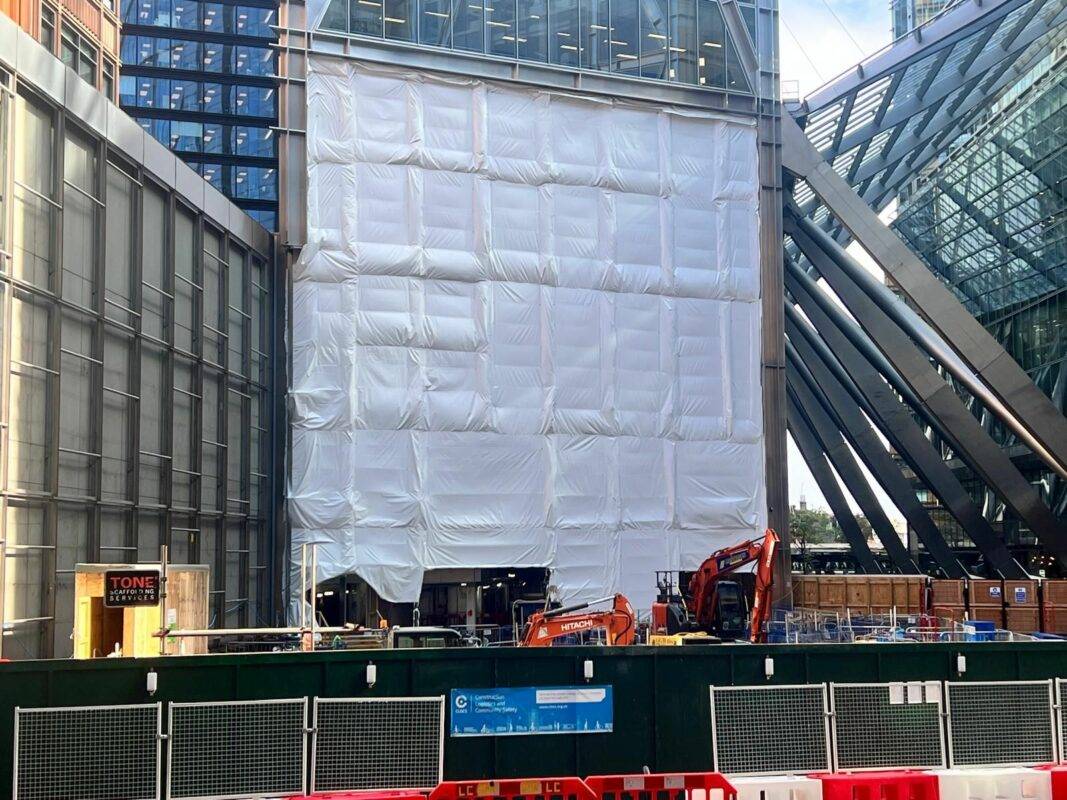
At Base Structures, we’re always looking for smarter ways to support our clients on complex projects. One of the biggest challenges contractors face is keeping programmes on track while navigating the unpredictable nature of the UK climate and the logistical hurdles of large-scale construction. That’s where Base Screens come in. In this blog post, we sat down with Mark Smith, who leads our Base Screens projects, to talk about flexibility, savings and sustainability.
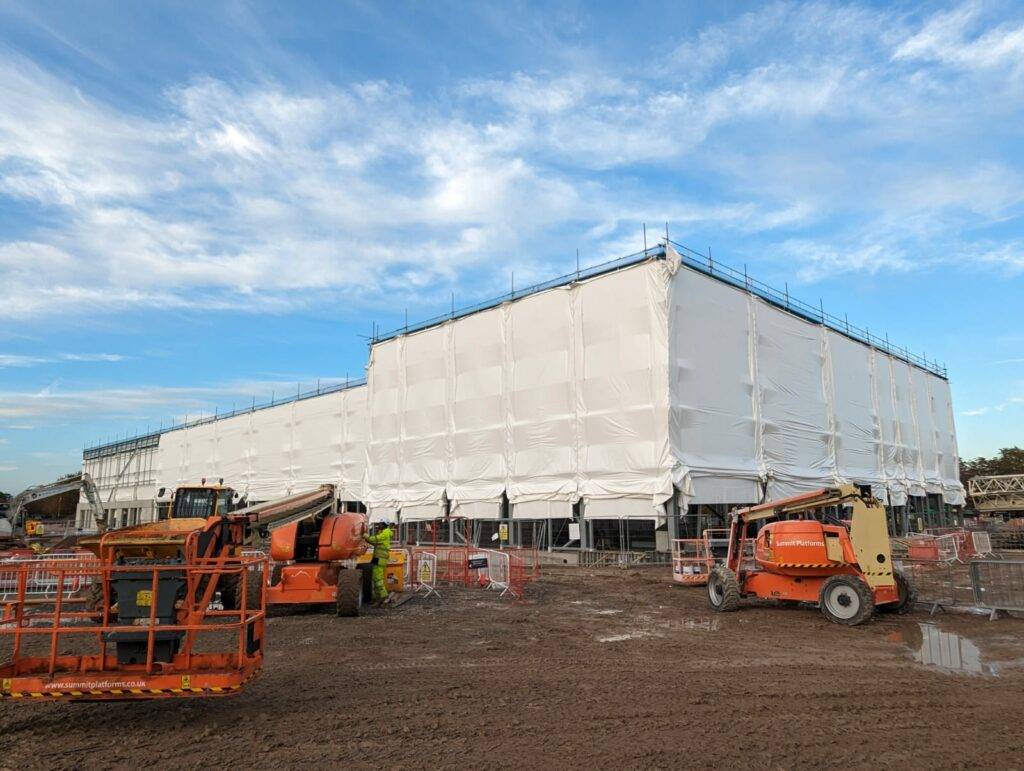
Base Screens are designed to be flexible. How do they work in practice when a project moves from one stage to the next?
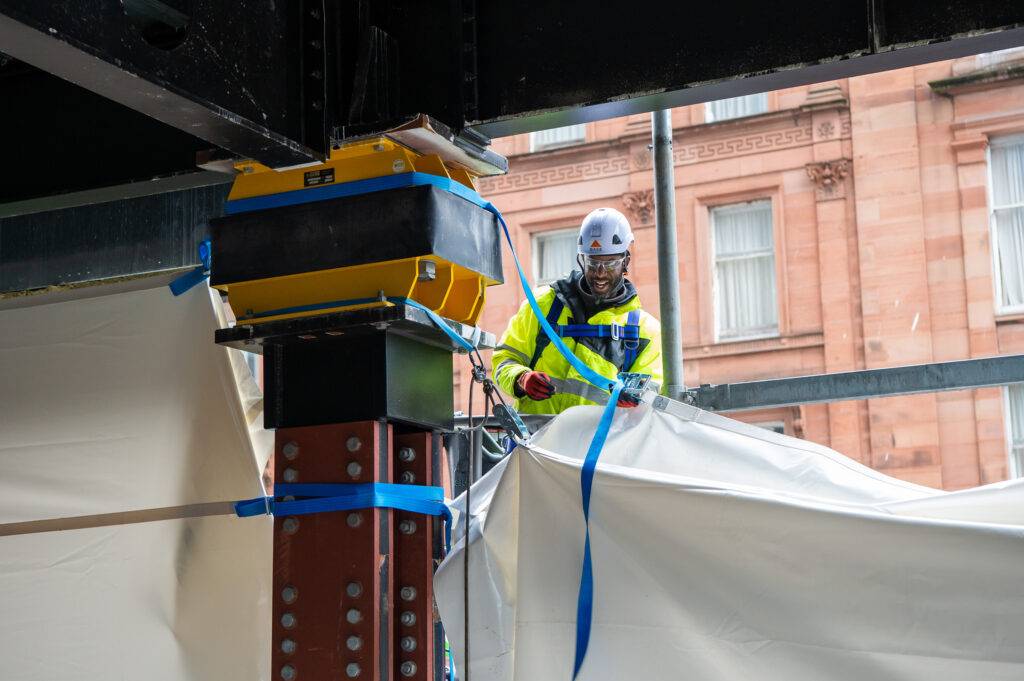
Base Screens are essentially designed to give project teams breathing space when permanent cladding can’t be installed right away. They create a stormproof, rainproof temporary envelope that allows internal works to continue as planned. Typically, the screens are tensioned around existing columns or fixed securely into floors and soffits, meaning they can adapt to the geometry of the building without requiring additional support structures.
Once their job is done, they can be removed in whichever way suits the project – whether that’s detensioning and removing them in panels, or cutting them out quickly with a Stanley knife. Because the material is lightweight and easy to handle, removal doesn’t risk damage to completed finishes inside the building, and the whole process is far less disruptive than dismantling scaffold or more traditional solutions.
Where do clients tend to see the biggest savings when they use Base Screens instead of more traditional solutions?
The savings are threefold: time, cost, and reduced disruption. Firstly, Base Screens are fast to install and just as simple to remove, so projects aren’t held up waiting for weather windows or scaffold alterations. Secondly, they don’t require secondary scaffolding or additional support structures, which immediately removes a layer of cost.
Perhaps the biggest financial gain comes from programme flexibility. By using Base Screens, clients can progress interior finishes while exterior cladding is ongoing, decoupling the two processes and driving the overall schedule forward. Finally, when it’s time to remove the screens, there’s minimal impact on the building fabric, so clients aren’t facing additional repair or reinstatement costs. All of this adds up to significant savings compared to more rigid, traditional alternatives.
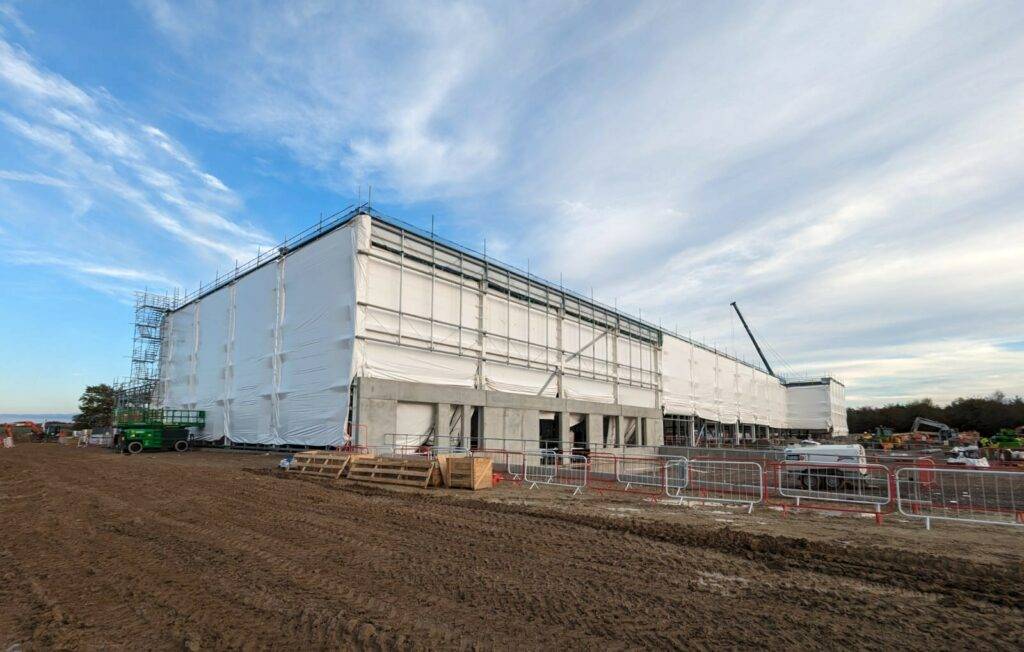
Weather protection is a big benefit of using Base Screens, but what other advantages do the screens bring once they’re up on site?
Beyond protecting works from the elements, Base Screens also reduce risk across the site. Sensitive interior finishes, equipment and materials are safeguarded from both weather and dust ingress, giving project managers peace of mind. In many cases, this reduces the likelihood of remedial works or replacement, which can be both costly and time-consuming.
Another advantage is the working environment they create. With the screens in place, teams can operate in a cleaner, safer, and more predictable space, which directly supports productivity. For clients, this reliability often proves just as valuable as the weatherproofing itself.
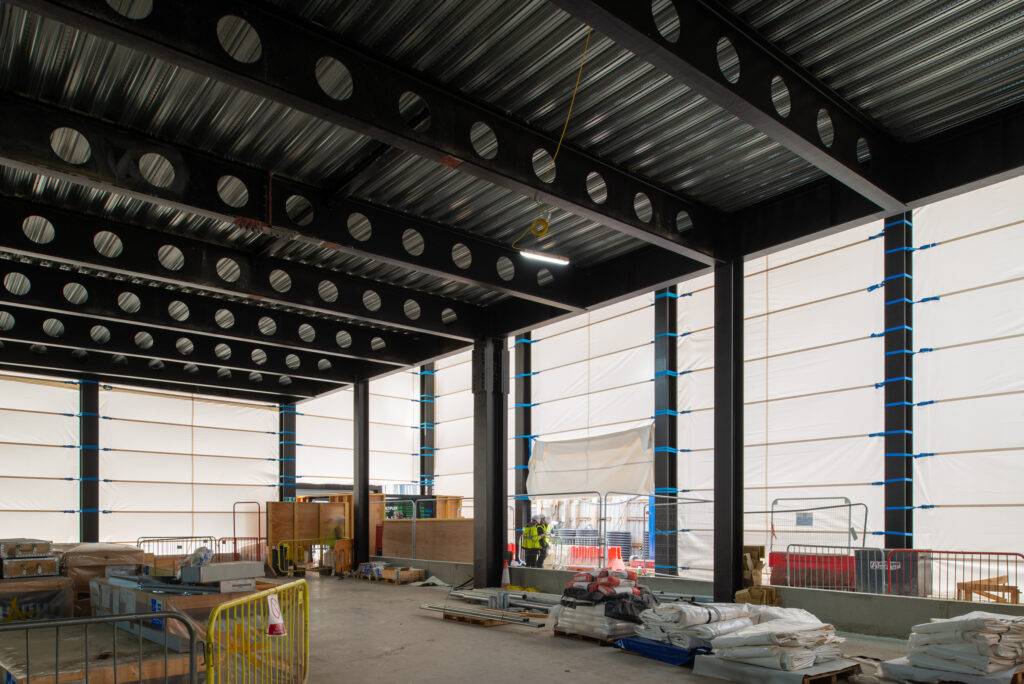
Can you think of a project where the adaptability of Base Screens really made a difference – maybe where they had to be moved, re-used or reconfigured part way through?
One of the main strengths of Base Screens is that they open up opportunities that simply wouldn’t exist with traditional methods. Historically, projects reliant on scaffold wraps or other temporary solutions would grind to a halt at certain points in the programme. With Base Screens, works can continue seamlessly, even in challenging environments.
Depending on the geometry of the project, there’s also no reason why screens can’t be reused. On multi-phase or staged projects, they can be relocated or re-tensioned in new positions, extending their value across different parts of the build. It’s this ability to adapt to evolving project demands that makes them such a versatile tool.
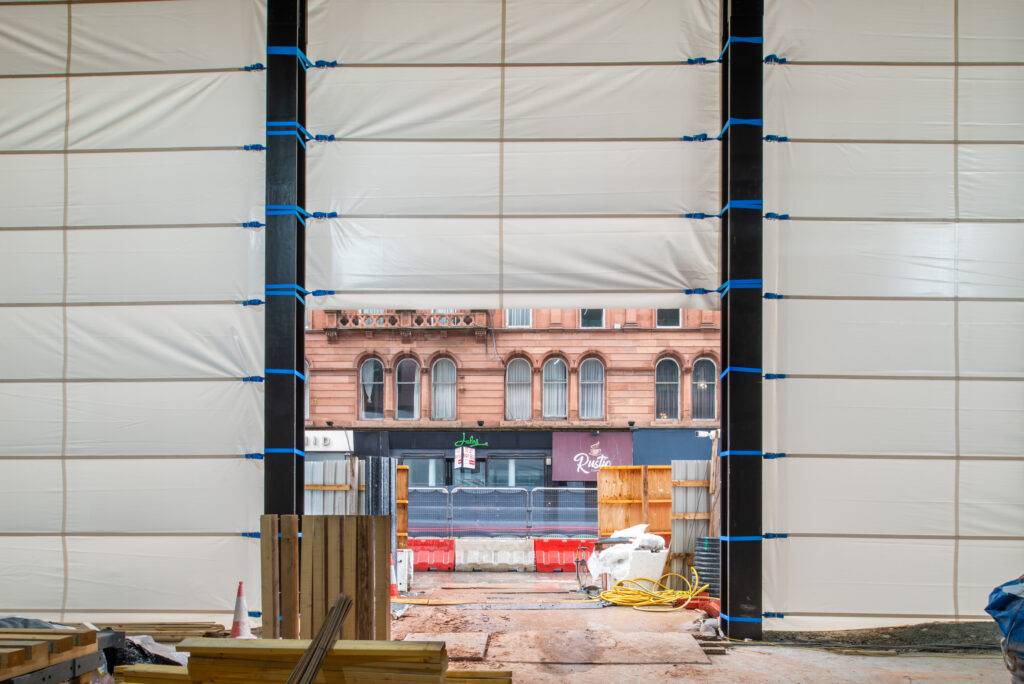
How do you see Base Screens helping the industry move towards more sustainable and efficient ways of working?
Sustainability is increasingly at the forefront of construction, and Base Screens are well placed to support that shift. They are fully reusable, which is a huge benefit on multi-storey buildings or large schemes with repetitive grid layouts. Instead of being single-use or needing to be discarded after one phase, the same screens can serve multiple functions across a site.
At Base, we’re also actively exploring more sustainable material options, with the aim of offering fully recyclable Base Screens in the near future. Coupled with the time and cost efficiencies they already bring, this makes them a strong fit for an industry under pressure to deliver greener, leaner, and smarter ways of working.
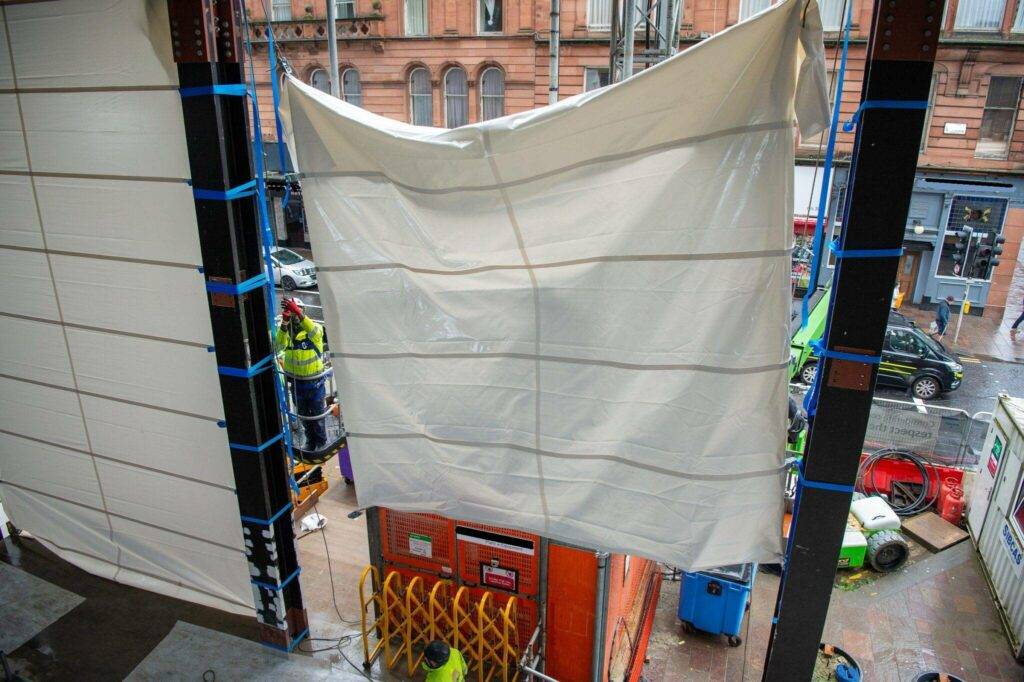
For more information about construction site screening, and how we can help keep your site on-time and on-track, find out more here, contact us today or explore our Project Resilience case study.
















 in Bristol