
Project Resilience
Client
Harwell Campus
Location
Oxford
Contractor
Glencar Construction
Client
Harwell Campus
Location
Oxford
Contractor
Glencar Construction
Delivering large-scale temporary weather protection to keep a complex build on programme
We designed and installed over 4,400m² of engineered temporary fabric weather screening at Harwell Campus, enabling construction to continue through challenging conditions and safeguarding programme delivery.

Maintaining Programme in Unpredictable Conditions
Glencar Construction approached Base to assist them with their prestigious project, building the new Moderna Innovation and Technology Centre based at Harwell Campus in Oxfordshire. This impressive build is set to be a new vaccine research, development & manufacturing facility.
The construction of the MITC facility at Harwell Campus required a solution that would allow critical works to continue uninterrupted despite exposure to the elements. Programme certainty was essential, with delays carrying significant cost and operational implications.
The challenge was to provide an engineered temporary enclosure system that could protect large sections of the build while remaining adaptable to the evolving construction sequence. The solution needed to be robust, quick to install and capable of withstanding changing weather conditions without hindering access or progress on site.
The brief
Our brief was to install engineered tensile fabric screens, totalling 4400m², each bespoke in design so they could be easily installed and demounted to the existing building with strategically placed webbing straps. Part of the brief was to ensure that the screens had minimal disruption to other site works and internal fit outs.
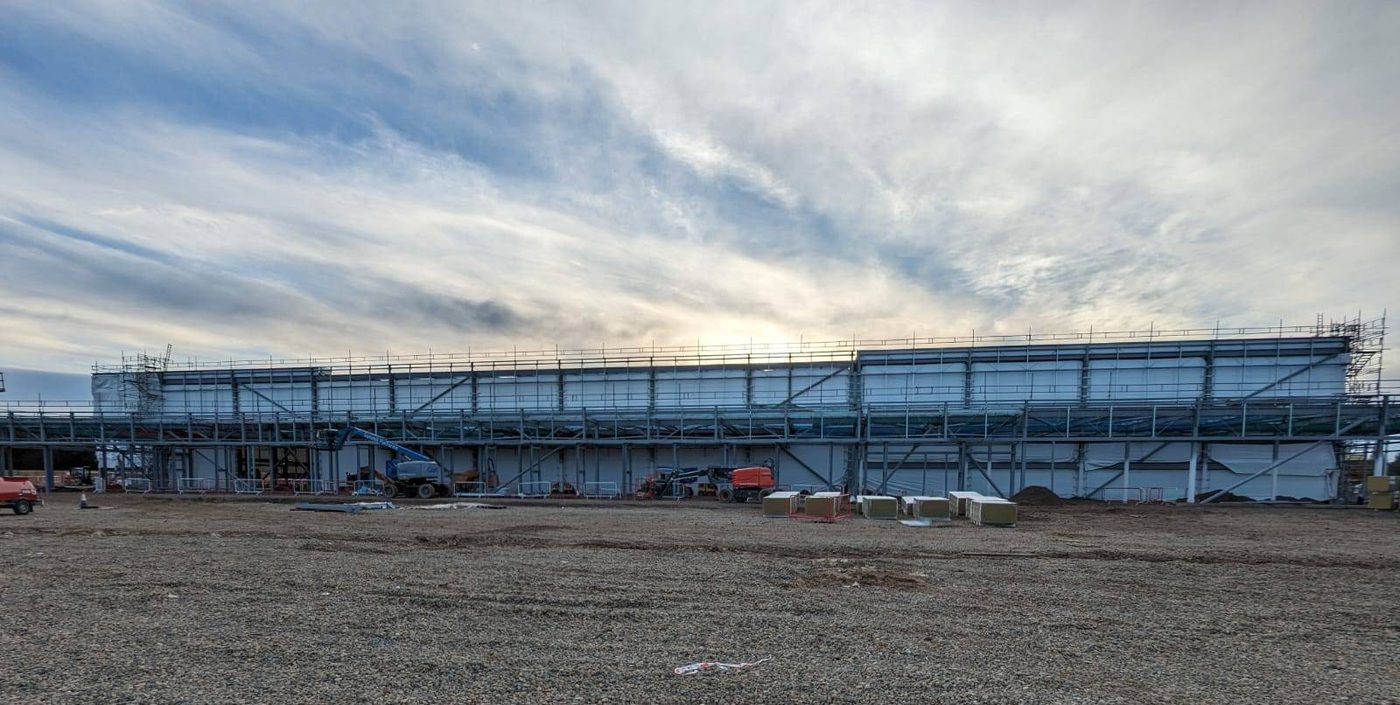
A Scalable, Temporary Fabric Screening System
We designed and installed a large-scale temporary weather protection system, covering approximately 4,400m² of the structure.
Using a lightweight PVC membrane supported by a tailored structural framework, the system was configured to integrate with the construction process, allowing phased installation and removal as the build progressed. The flexibility of the fabric system enabled it to adapt to different areas of the site, maintaining protection where it was most needed at each stage.
The enclosure provided effective shielding from wind and rain while maintaining safe access for operatives and equipment. Its lightweight nature reduced load implications on the structure and allowed for rapid deployment, supporting a fast-moving construction programme.
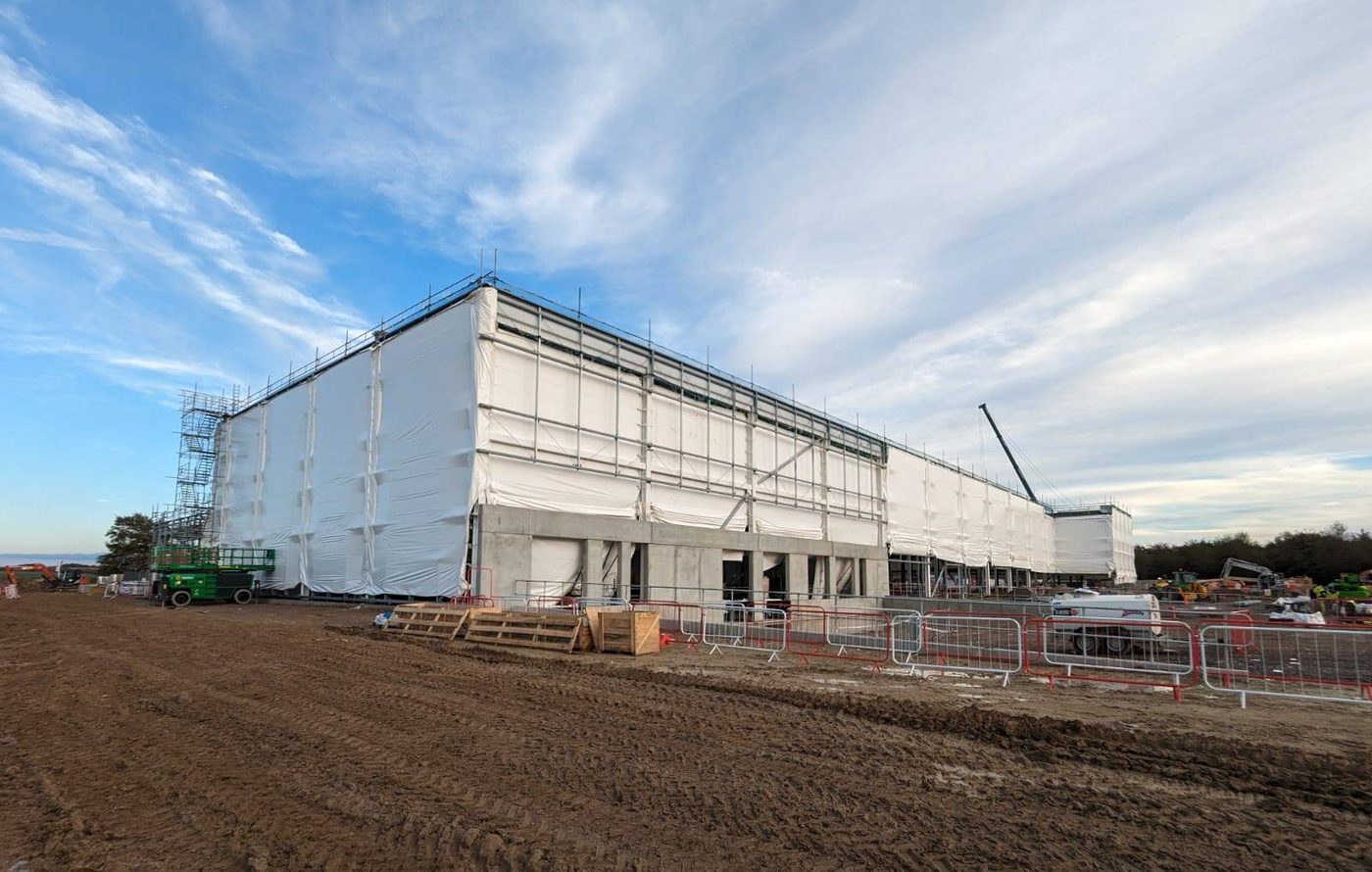
Protecting Progress & Delivering Certainty
The completed system enabled construction to continue with minimal disruption, protecting critical work areas and maintaining momentum on site. By reducing exposure to weather-related delays, the project supported programme certainty and improved overall efficiency.
More broadly, the approach demonstrates how temporary fabric structures can play a vital role in modern construction by providing adaptable, cost-effective solutions that respond to changing site conditions.

