London 2012 Games Shooting Ranges
Client
ES Global Ltd
Location
London
Architect
MAGMA
Contractor
John SISK & Son Ltd
Client
ES Global Ltd
Location
London
Architect
MAGMA
Contractor
John SISK & Son Ltd
Delivering a vibrant, large-scale structure for Olympic competition venues
We engineered and installed the tensile fabric façades for the London 2012 Shooting Ranges, creating a series of bold, lightweight structures designed for performance, visibility and full demountability.


Designing Temporary Structures at Olympic Scale
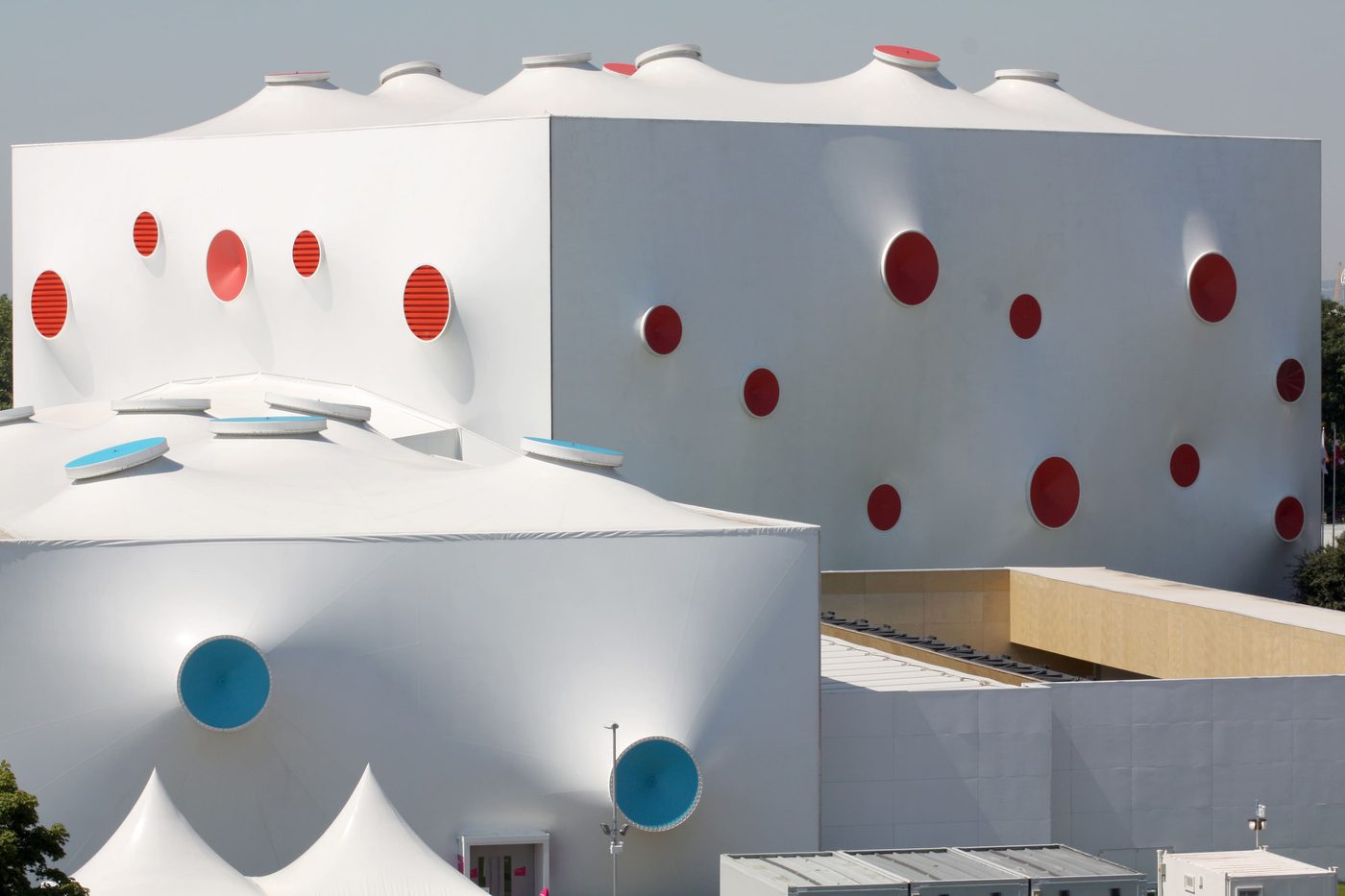
Stunning architecture has become a trademark of the modern Olympic and Paralympic Games, with environmental credentials being of paramount importance. As such these three structures are not only at the forefront of contemporary design, they are also fully demountable and relocatable, amply fulfilling these criteria. Together they hosted the Shooting, Paralympic Shooting and Paralympic Archery events. The set consisted of the 25 metre, Combined 50 & 100 meter and the Finals Shooting Ranges.
The challenge was to create visually distinctive buildings at significant scale, while ensuring they remained lightweight, efficient to construct and fully demountable after the Games. At the same time, the façades needed to perform technically, supporting natural ventilation, reducing wind loading and providing a clear identity within the wider Olympic Park.

A Dynamic, Colour-Coded Fabric
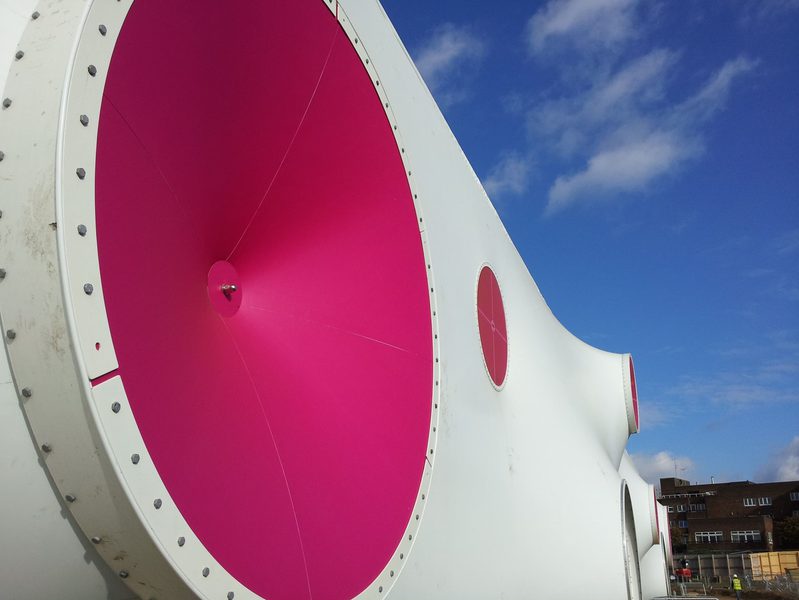
We designed, manufactured and installed tensile fabric façades across the three main range buildings, using large areas of PVC membrane to wrap each structure in a continuous, flowing skin.
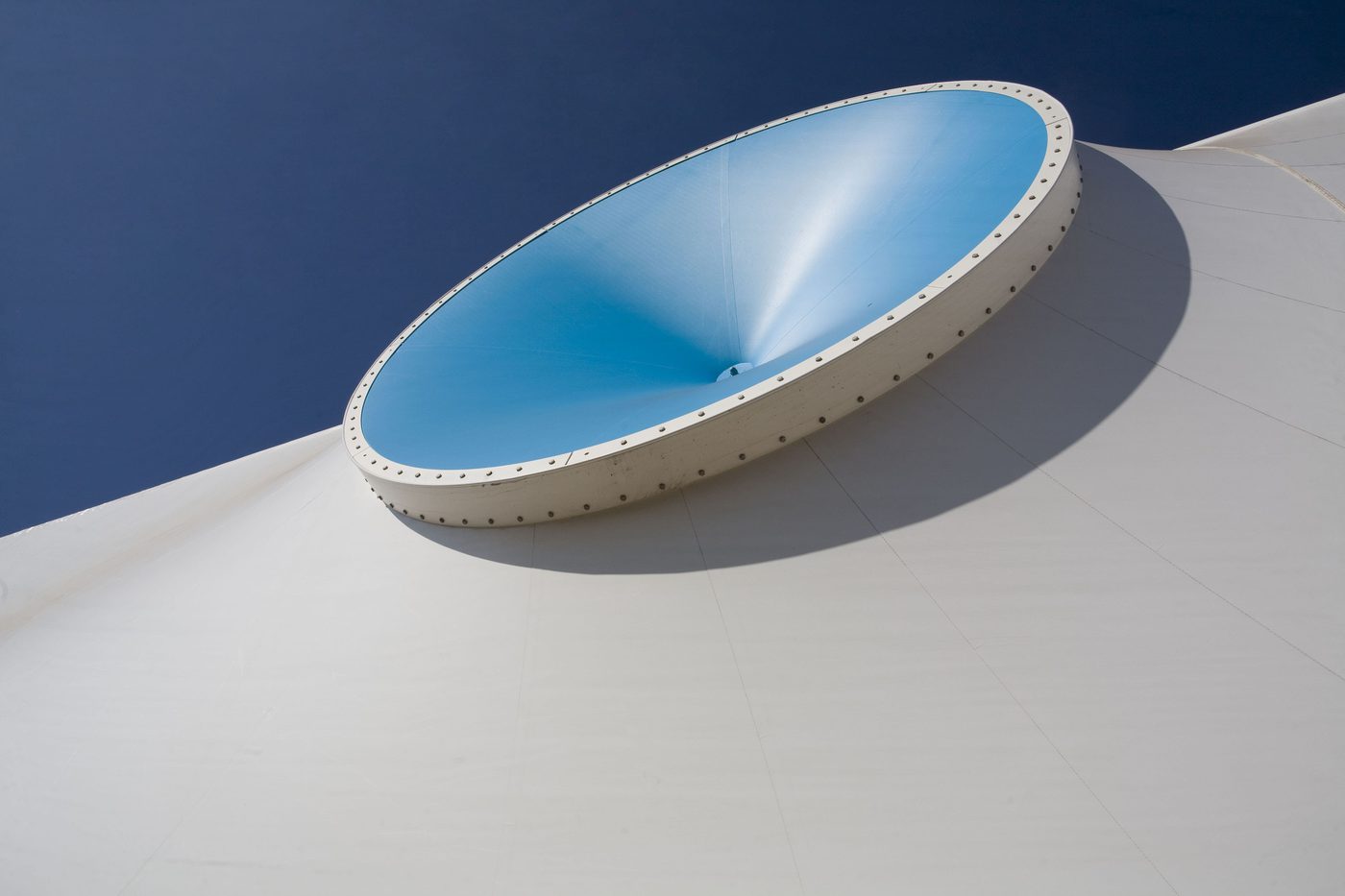
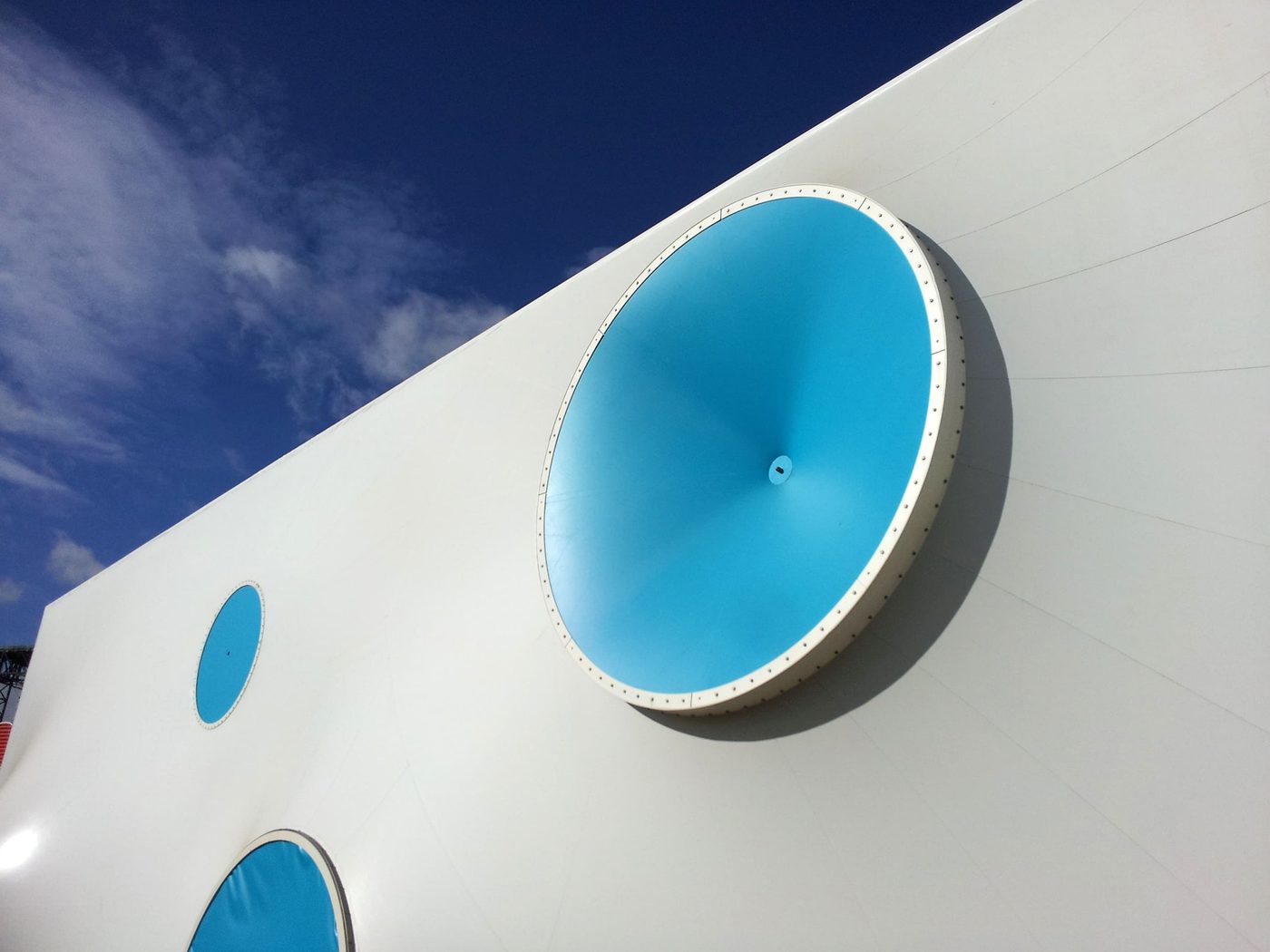
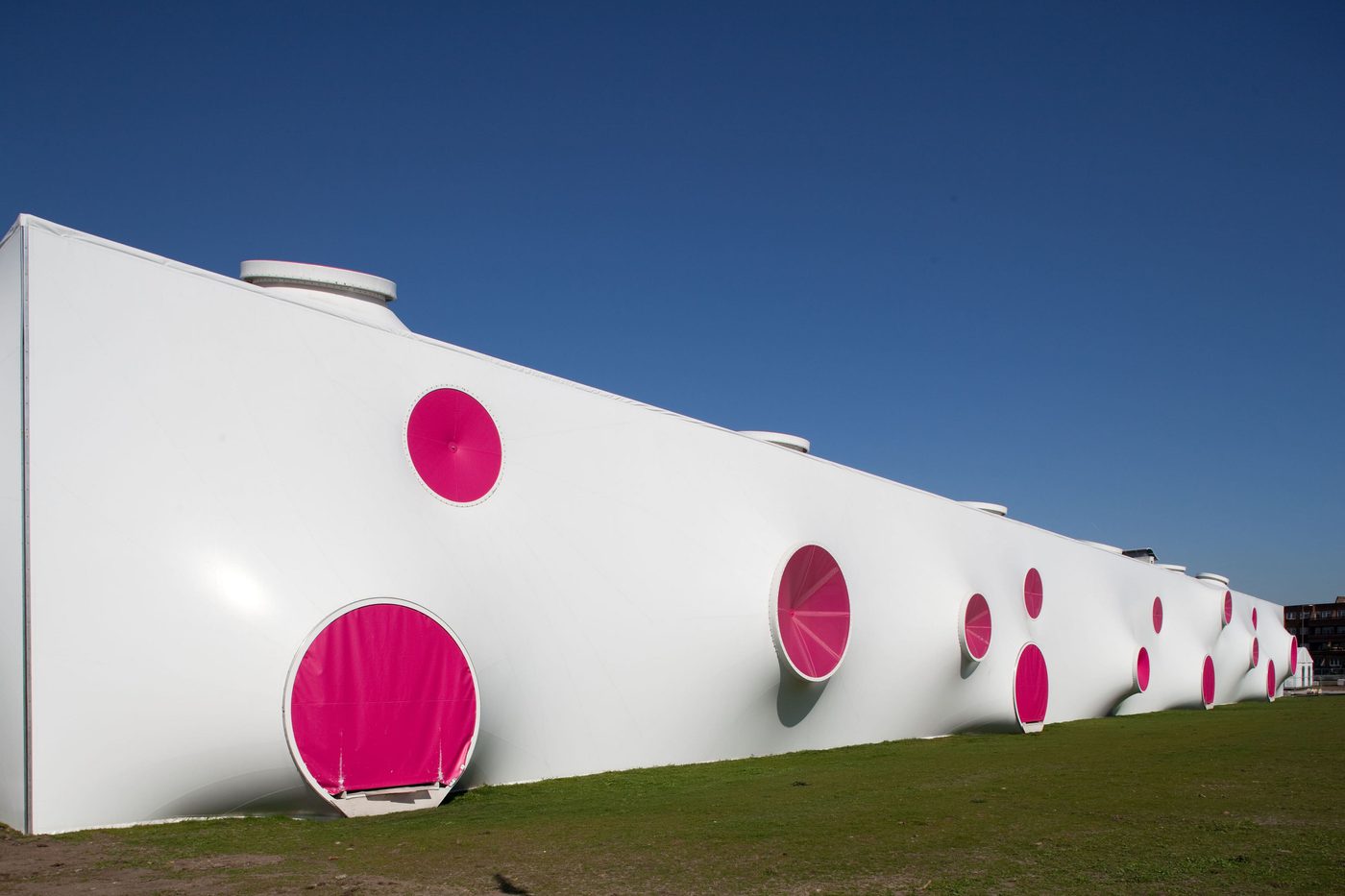
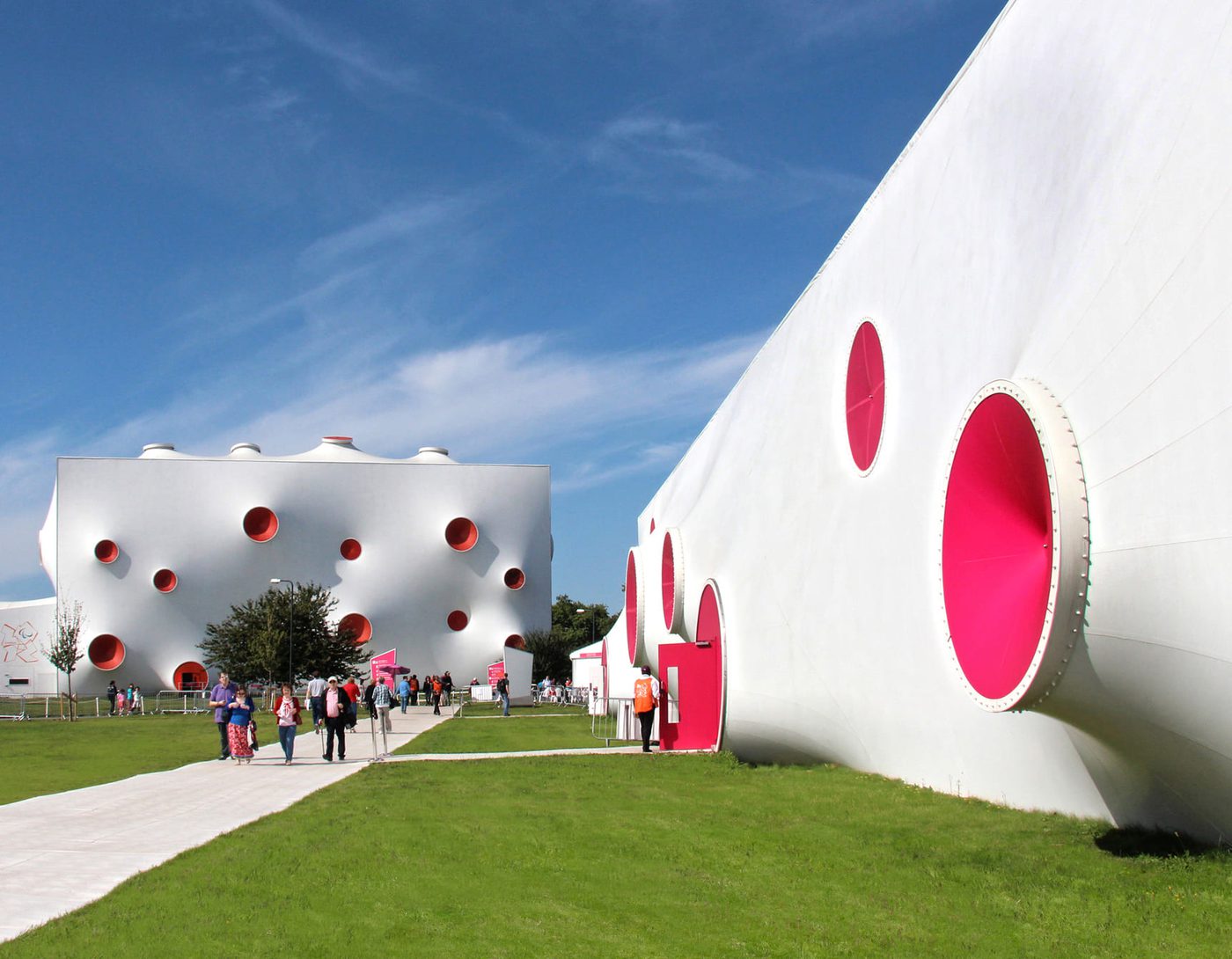
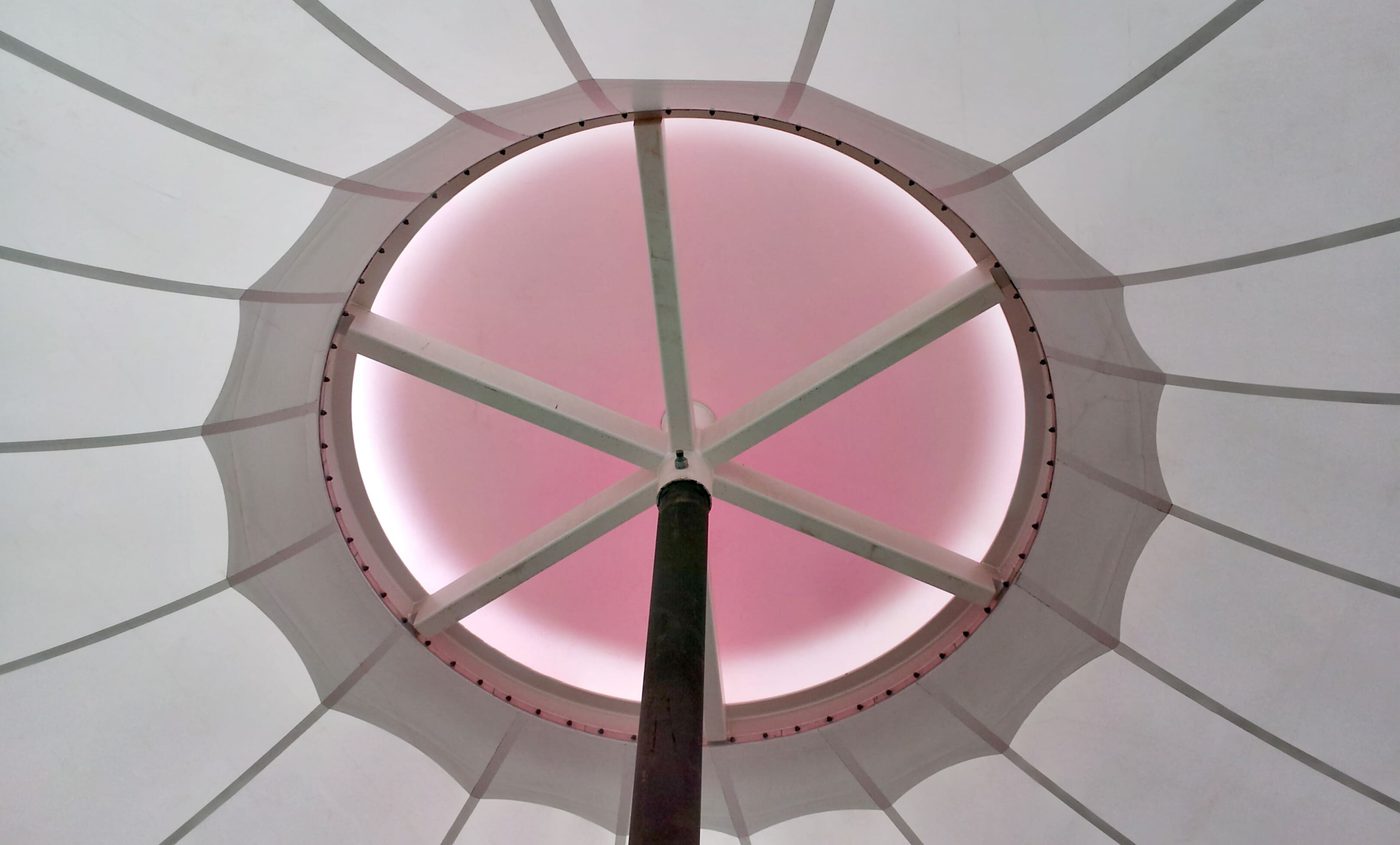
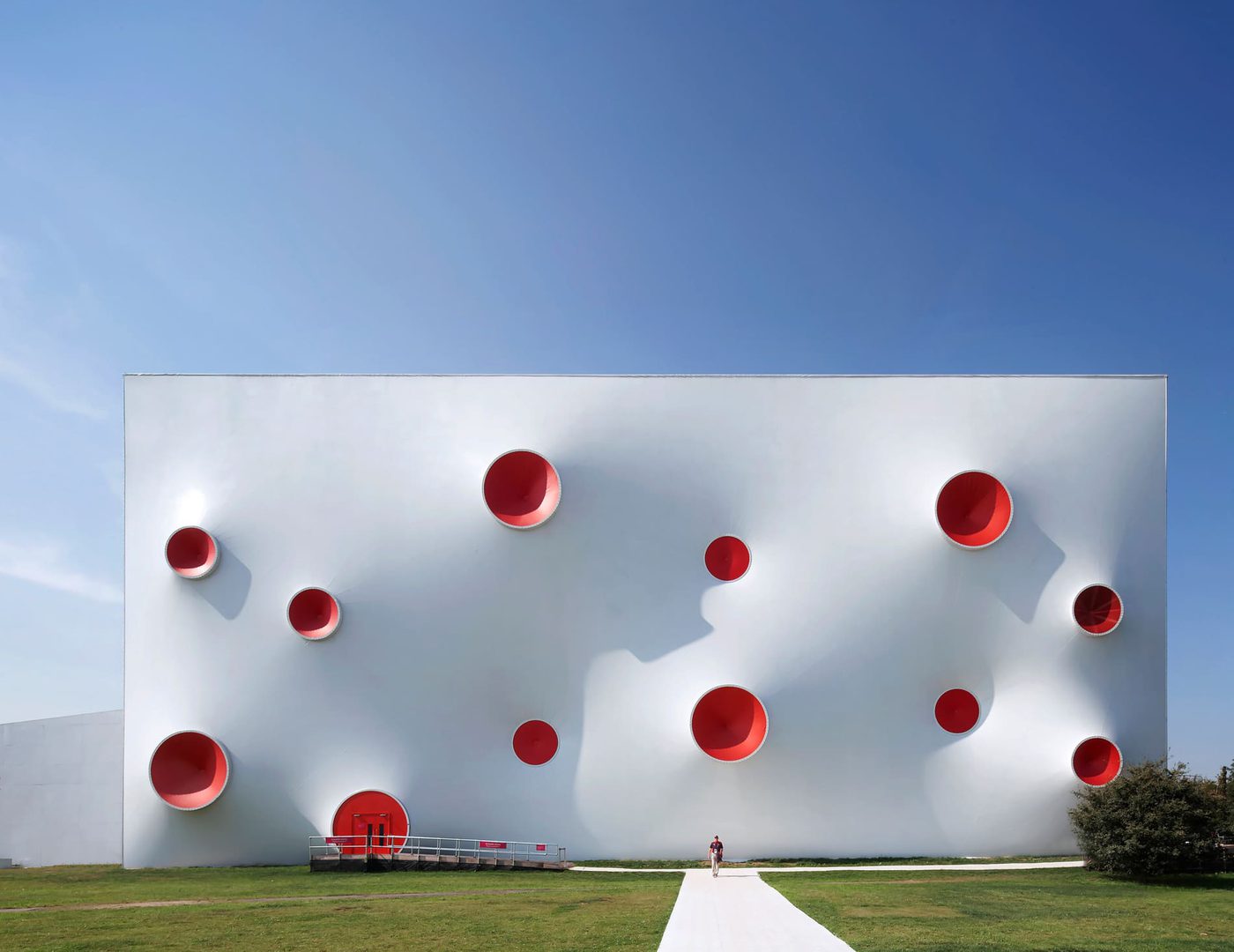
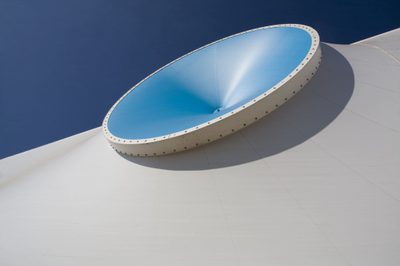
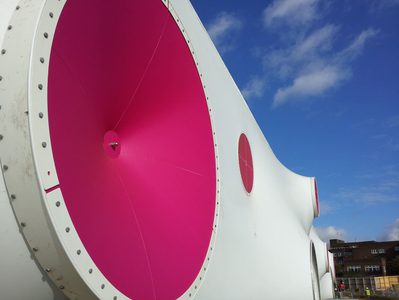
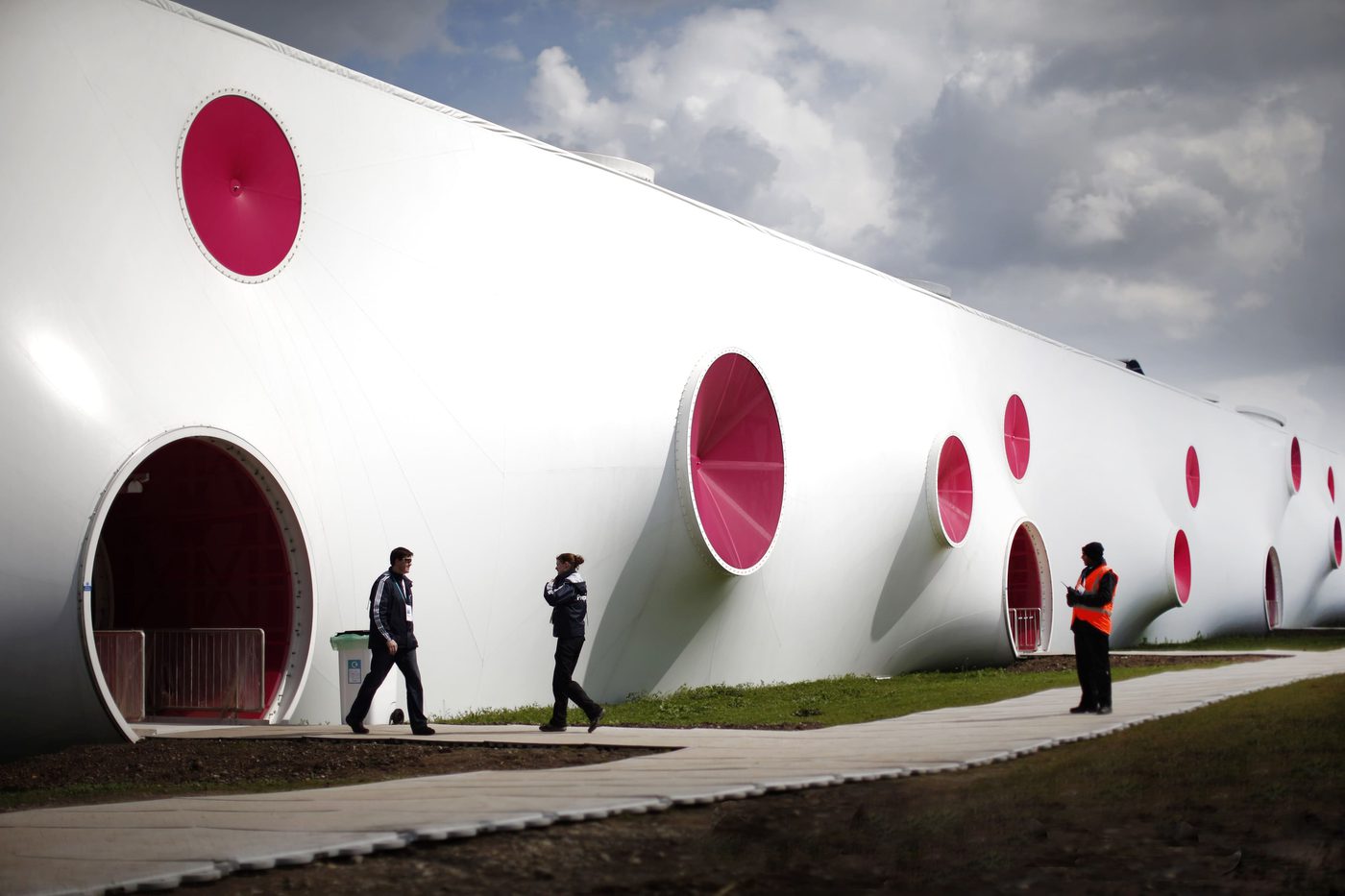
Each building was defined by a bold colour identity, orange, magenta and blue, expressed through a series of circular openings set within the membrane. These openings were not purely visual; they acted as ventilation points at high level and entry points at ground level, integrating function directly into the façade design.
The scale of the installation was significant. The Finals Hall alone measured approximately 25m x 47m x 50m and required around 16,000m² of fabric, with a further 9,000m² and 5,000m² applied across the additional range buildings.
The membrane was tensioned across a steel framework to create a double-curved surface, improving structural efficiency while delivering a distinctive architectural form. This approach reduced material use, simplified construction and ensured consistent performance across all venues.
A Defining Visual Identity for the Games
The completed shooting ranges became one of the most recognisable architectural features of the London 2012 Games. Their bold colours and sculptural forms created a strong visual identity, transforming highly technical sporting venues into engaging, memorable spaces for spectators.
Beyond their appearance, the structures performed exactly as intended. The lightweight façade system enabled rapid construction, effective environmental performance and, crucially, full demountability following the Games. In line with the wider Olympic sustainability strategy, the buildings were designed for reuse, ensuring materials could be redeployed rather than discarded.
The project received international recognition, including an IFAI International Achievement Award, highlighting its innovation in both design and delivery.
It stands as a clear demonstration of how tensile architecture can deliver at scale—combining efficiency, flexibility and visual impact to meet the demands of world-class events.