University of Nottingham Castle Meadow Campus
Client
University of Nottingham
Location
Nottingham
Contractor
G F Tomlinson
Client
University of Nottingham
Location
Nottingham
Contractor
G F Tomlinson
Replacing the most complex roof system in Europe
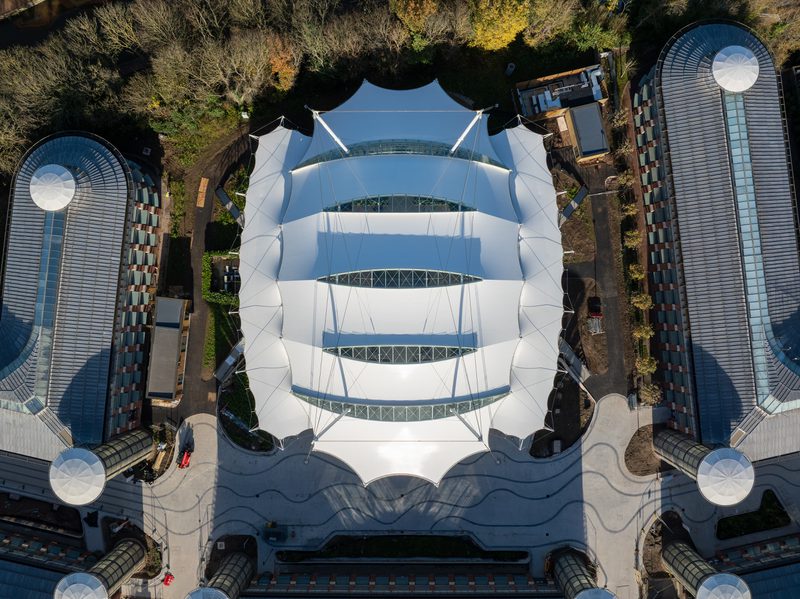
We replaced one of the most complex roof structures in Europe, to ensure the Central Building in the Castle Meadow Campus at the University of Nottingham remains at the heart of innovation and education in the UK.
Sector
University and Colleges
Project team

Products
Replacement CanopiesFabric
- FR900 – TYPE II PVC/NANO
- FR1000 – TYPE III PVC/NANO

Scale without Compromise
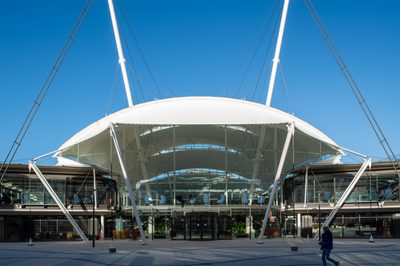
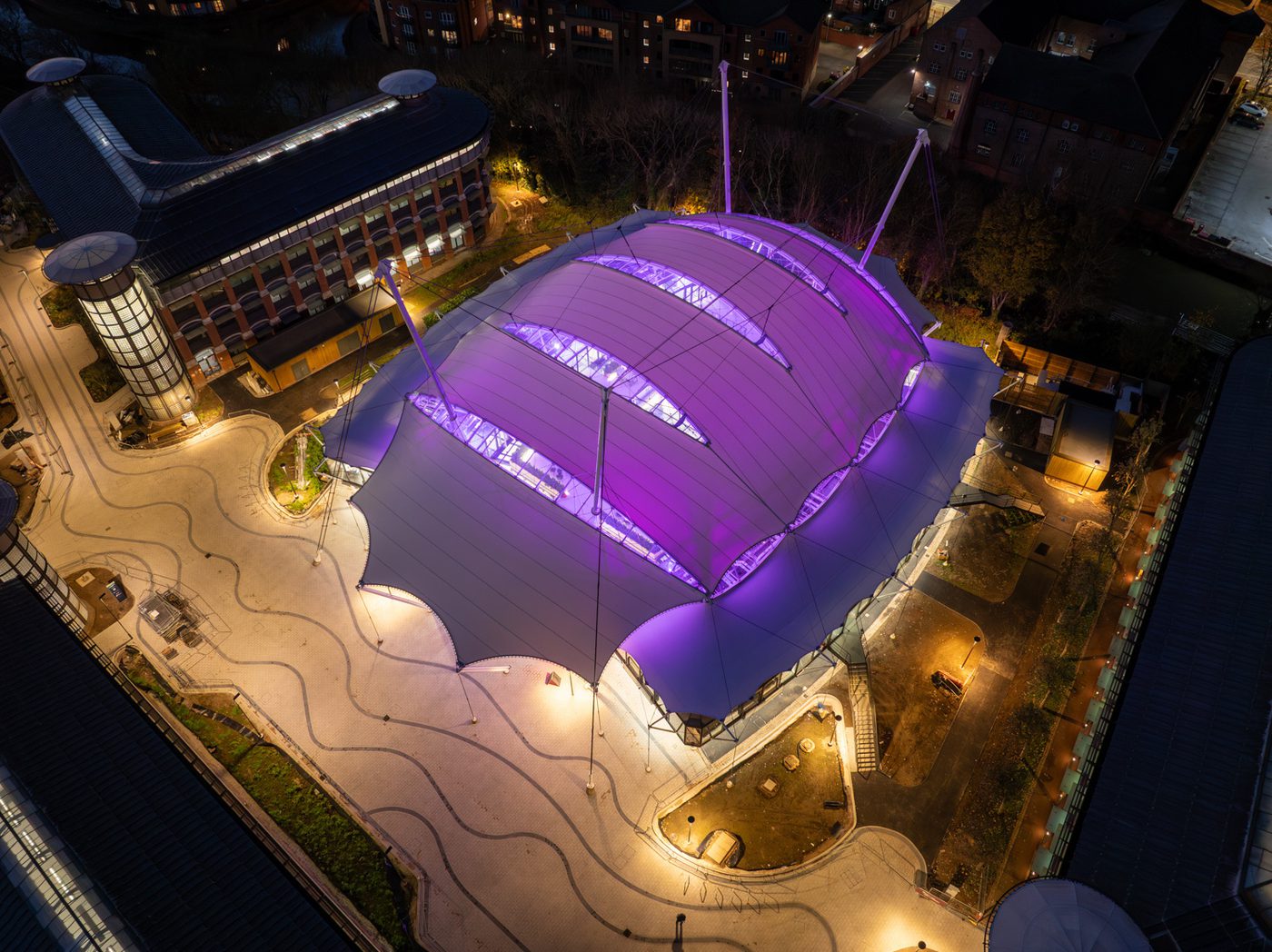
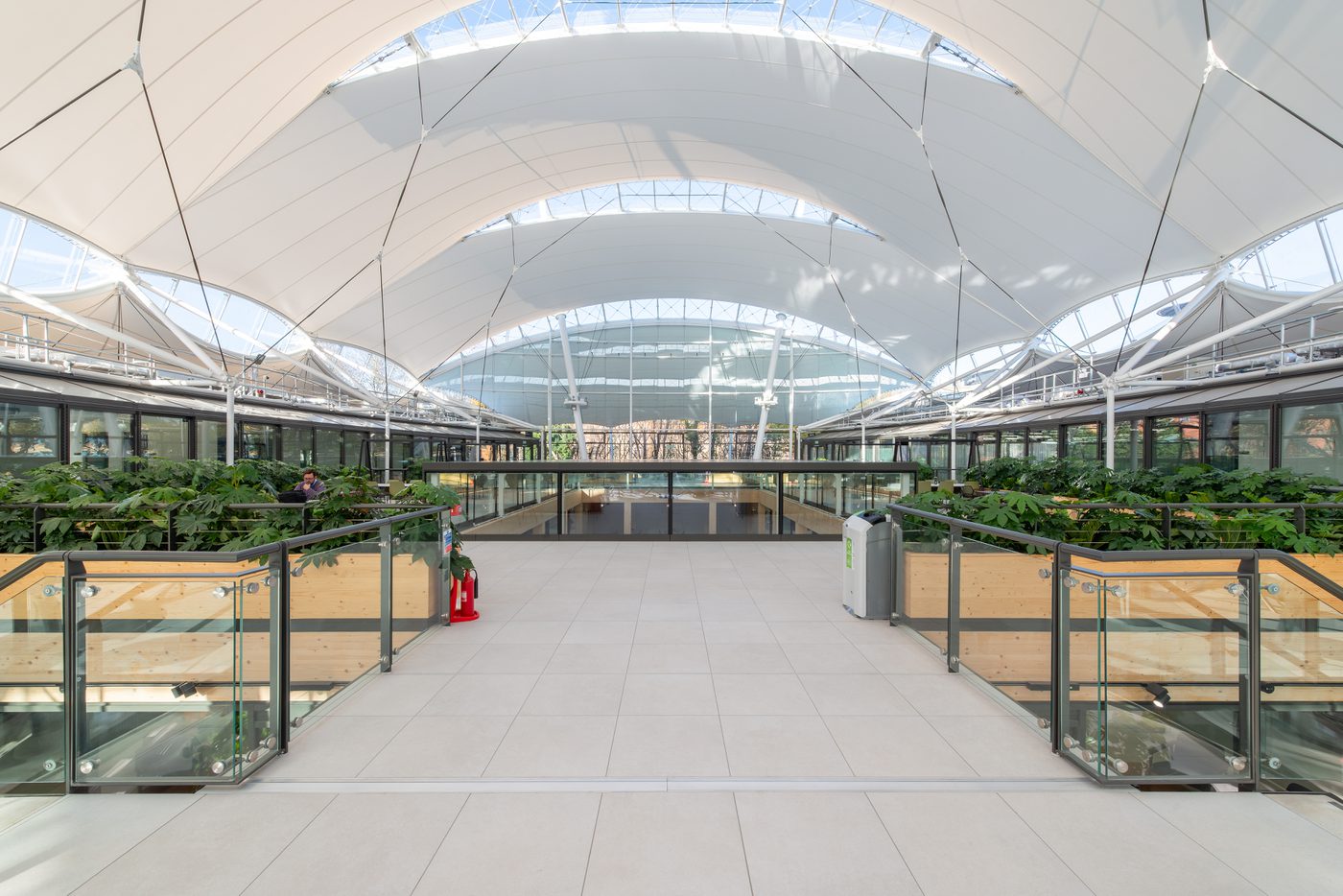
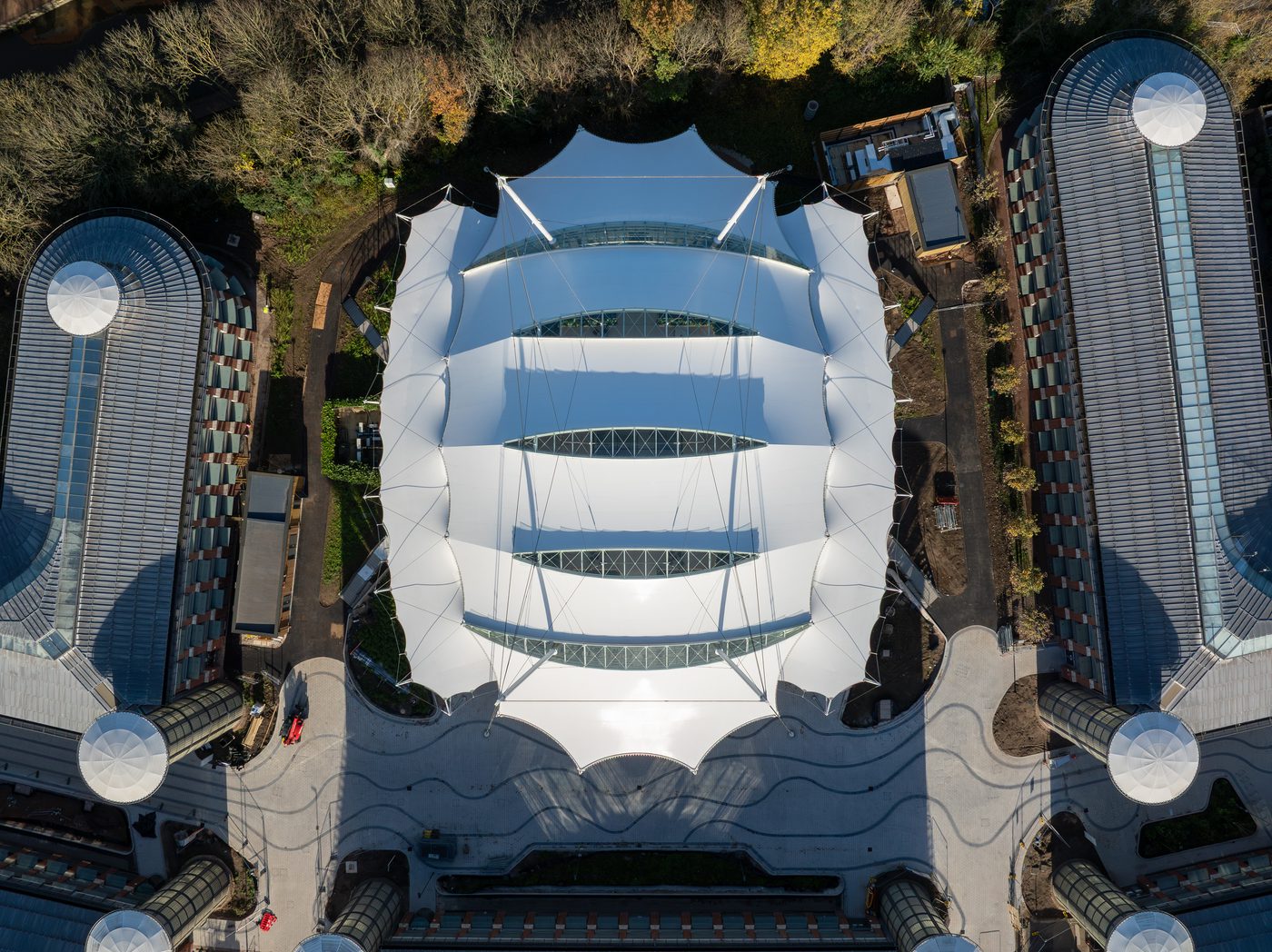
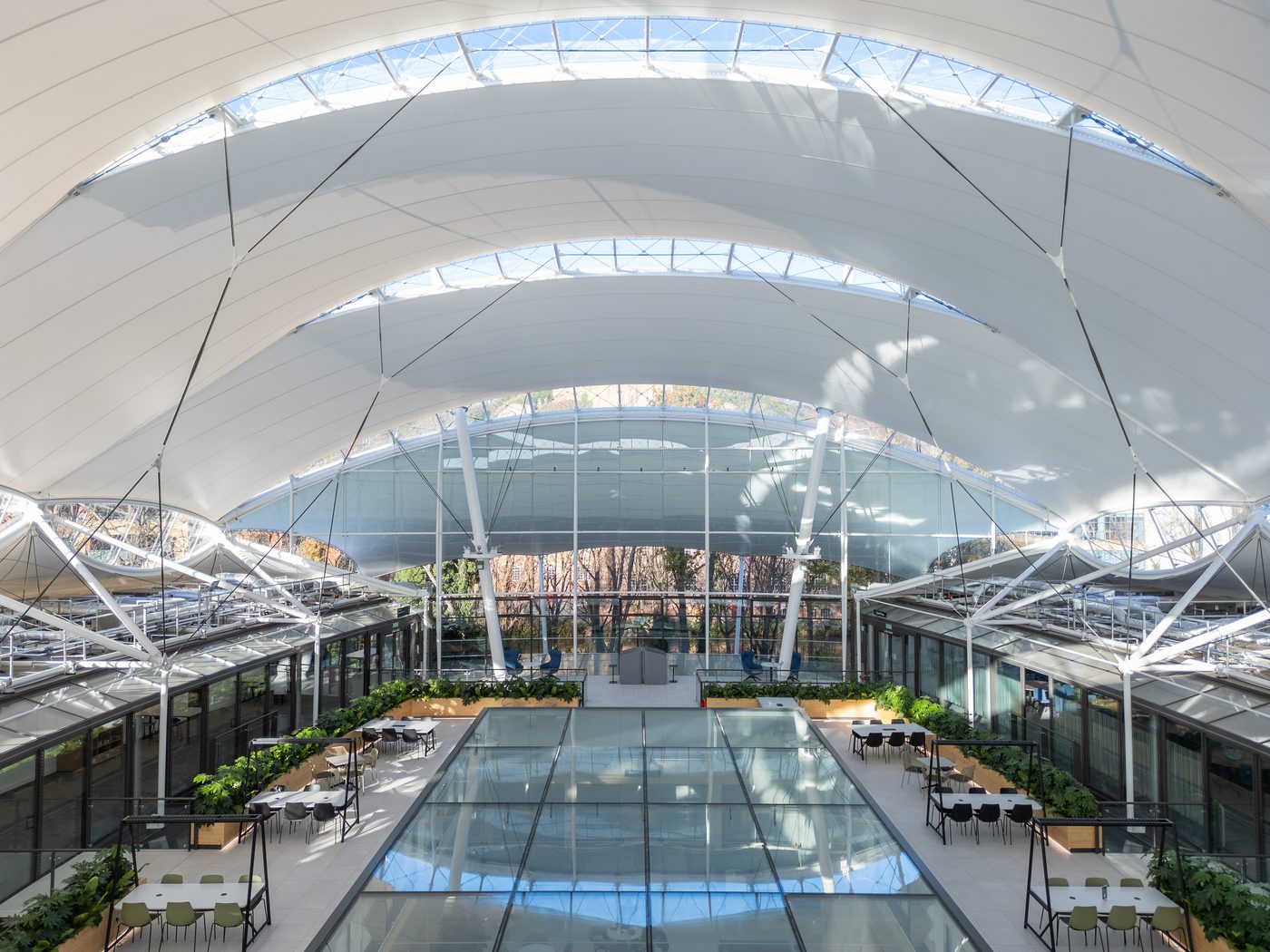
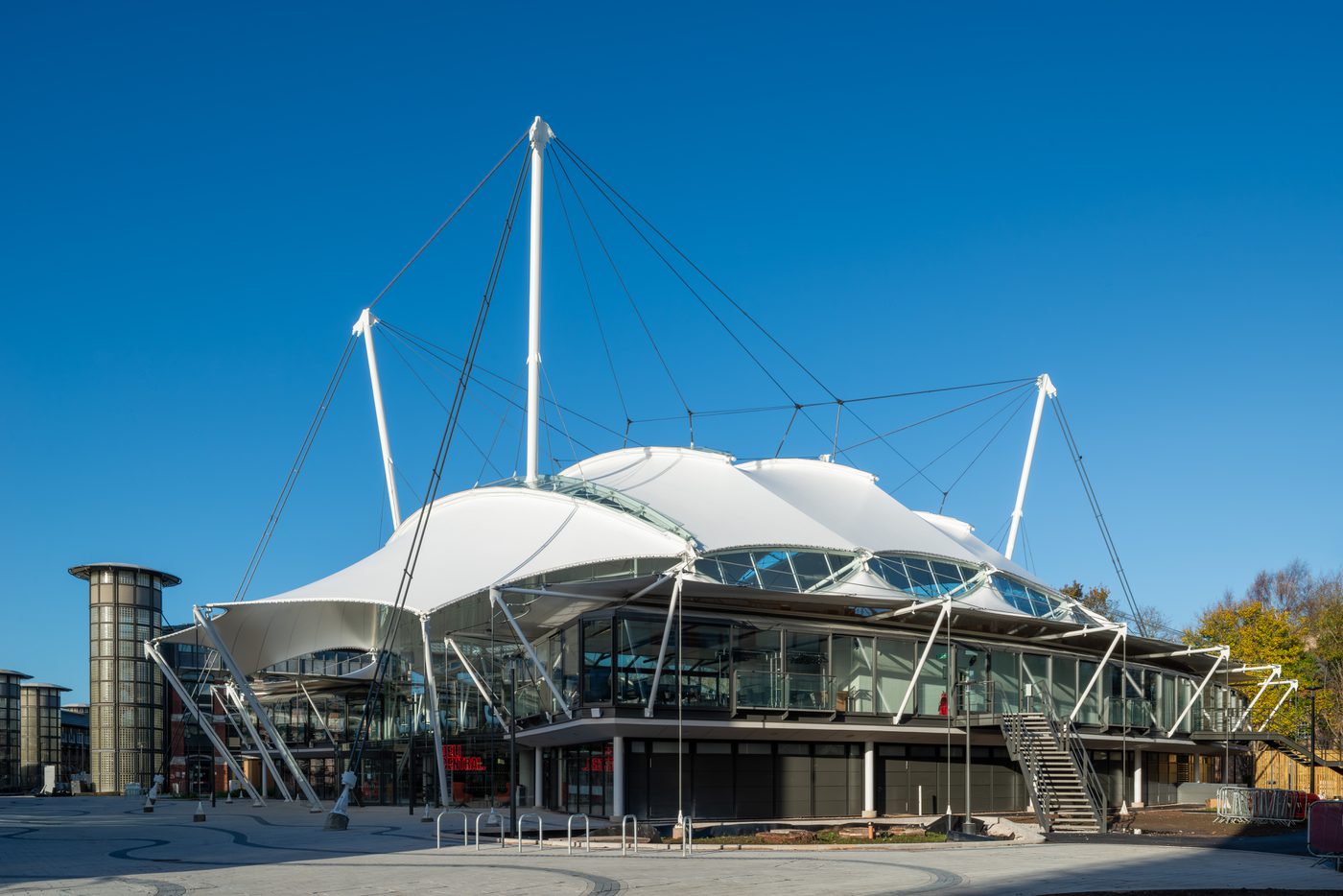
The Castle Meadow canopy is one of the most complex roof structures in Europe, spanning approximately 3,000 square metres of tensile fabric. To replace the roof, we had to manage an intricate installation sequence, developed to safely lower three floating ladder trusses that support the primary steelwork and main roof. Each of the 12 spreader and lifting beams was engineered in five individual sections, allowing them to be assembled in situ around the existing roof tie rod system.
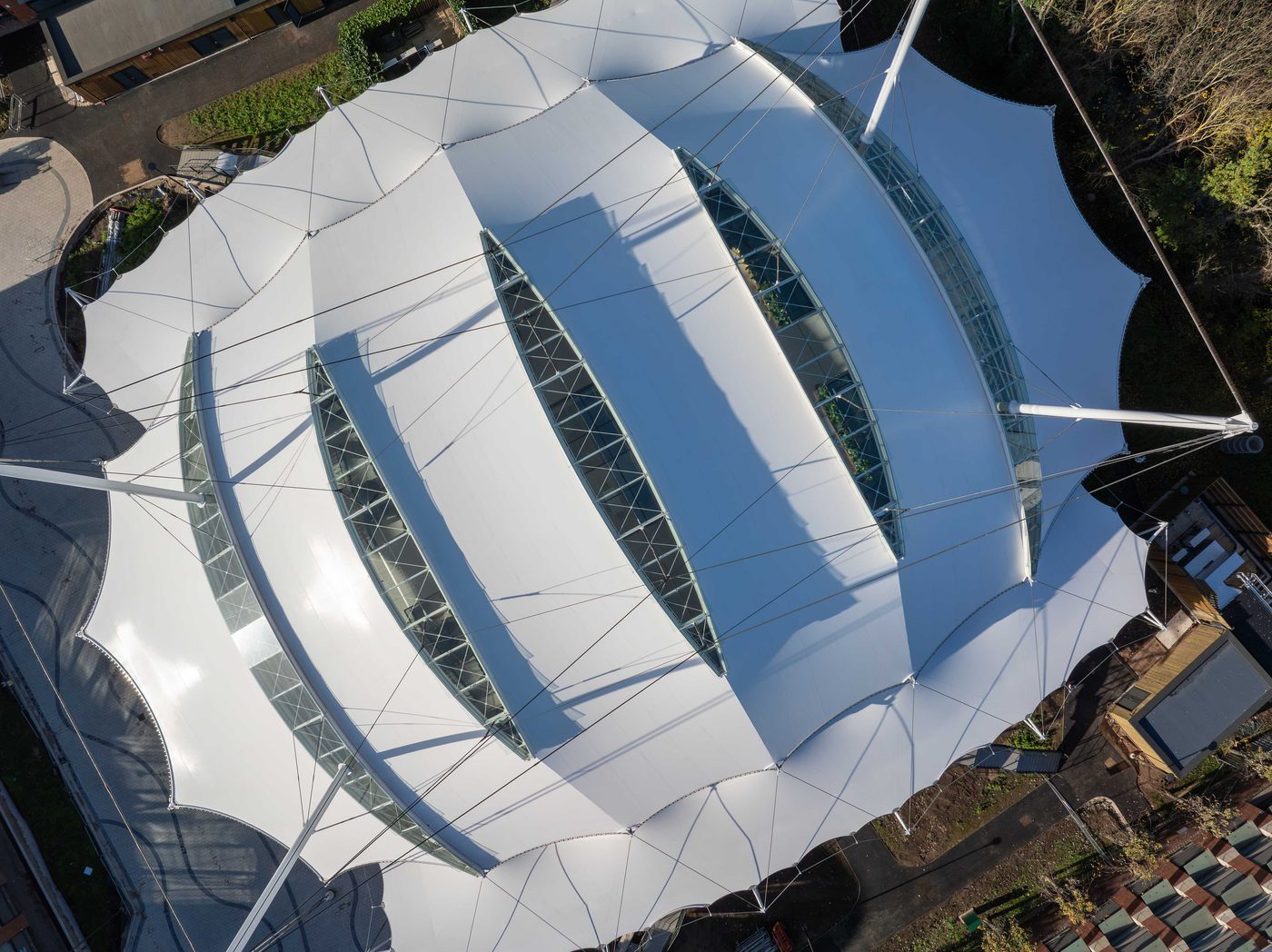
A Defining Feature for a New Campus
The intricate design of this unique tensile fabric roof required specialist engineering analysis from tensegrity experts, Tensys Ltd. In collaboration with the whole team, detailed installation planning was developed to enable the safe removal of the existing canopies and glazing. Both Tensys’ & our team of tensile fabric specialists skilfully navigated the challenges encountered during the planning process, ensuring a safe and smooth transition from the old canopy to installation of the new.
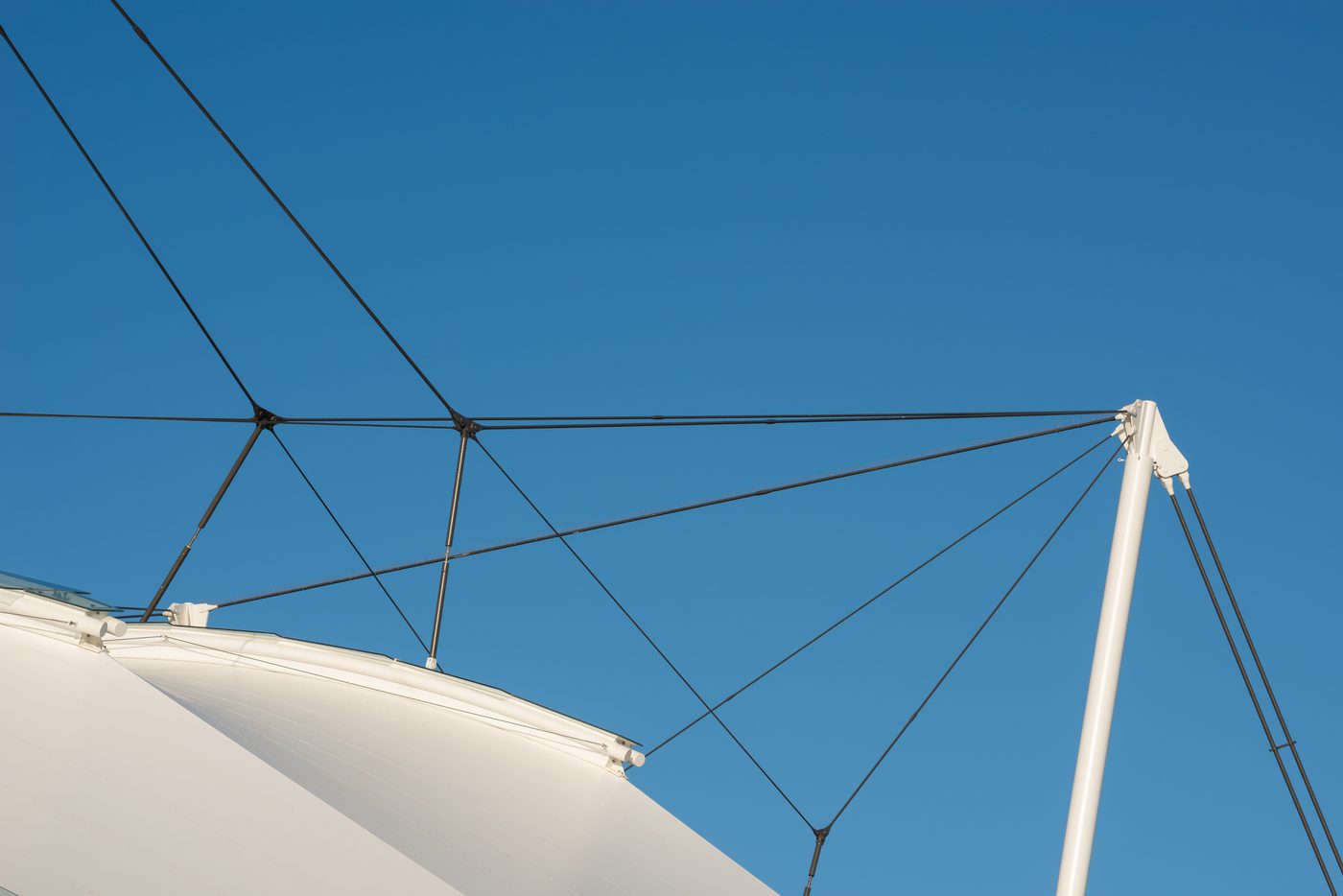
Given the delicate and highly engineered nature of the roof structure, the removal process demanded exceptional precision and care. With the fabric, tierods and steel superstructure all structurally interdependent, it was critical to preserve that delicate balance while removing one of the roof’s key components: the fabric membrane itself. Each of the three floating ladder trusses was therefore individually and sequentially lowered in controlled 100mm increments to prevent overstressing the tierod system above. This painstaking process was managed using twelve load cells, continuously monitored in real time to ensure that expected load limits were not exceeded at any stage. Adding to the complexity, much of this demanding work was carried out at height by a highly skilled rope access team, whose expertise was essential to executing the operation safely and efficiently in such a challenging environment.
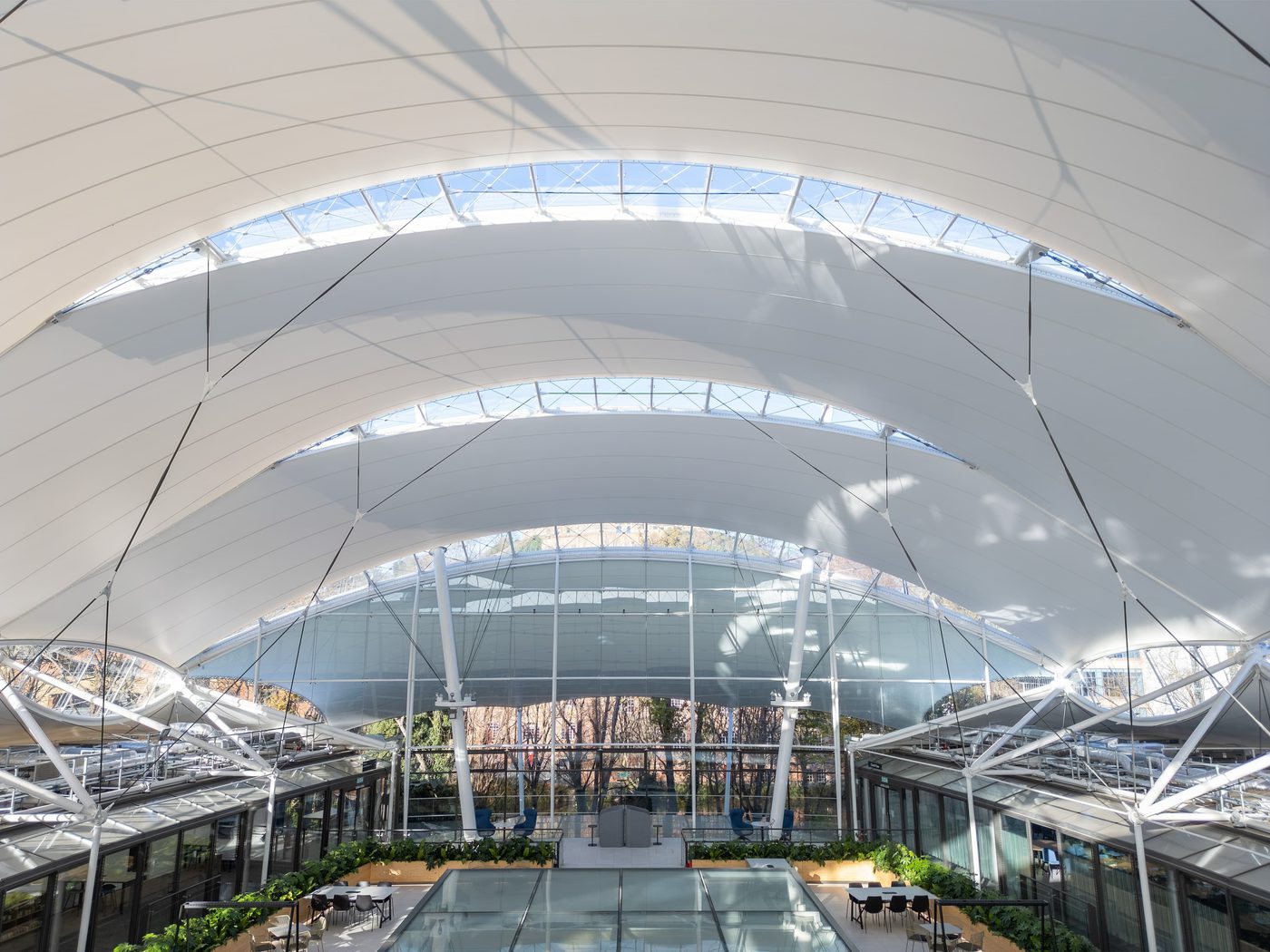
Integrating a Complex Glazing Solution
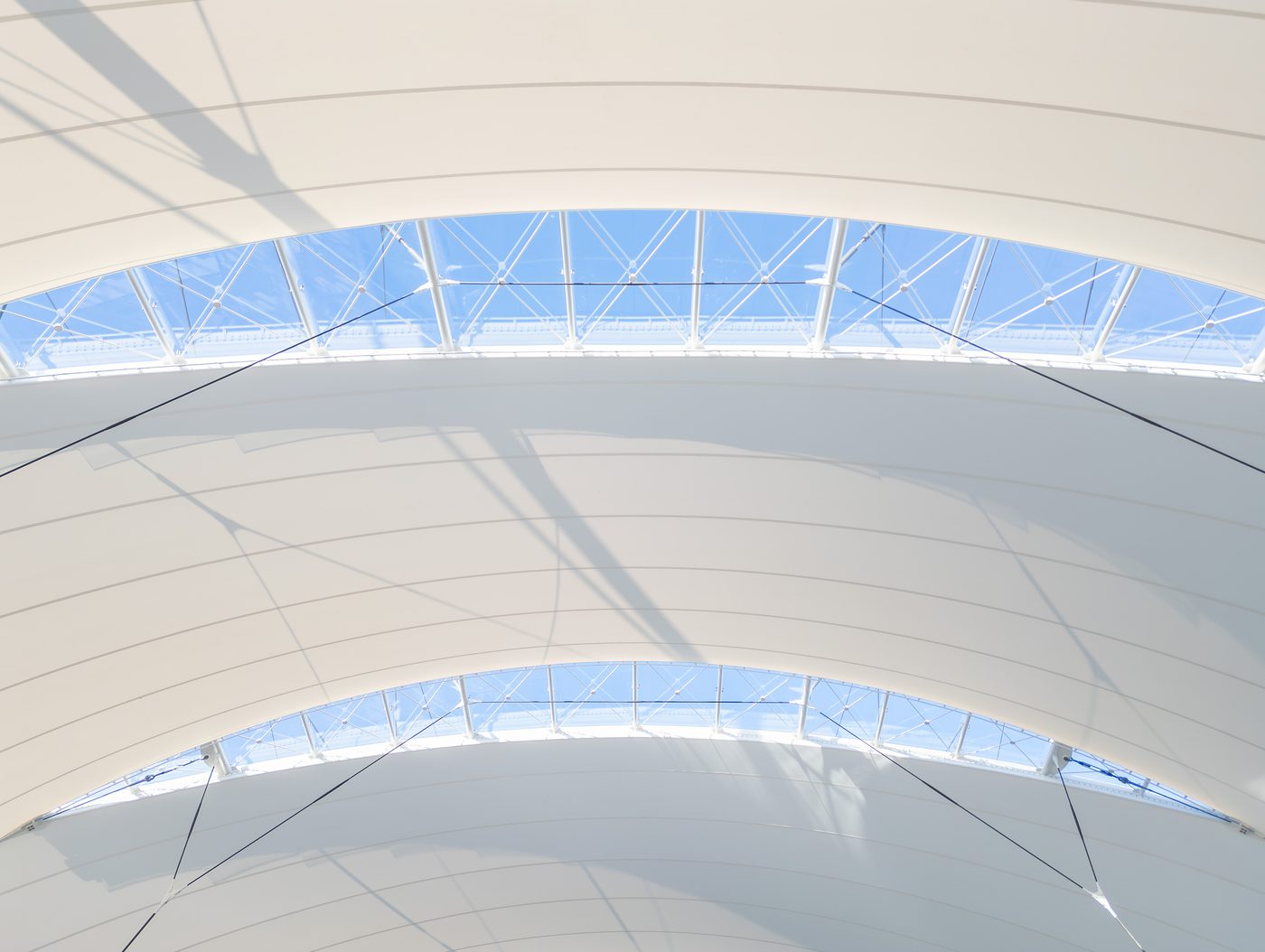
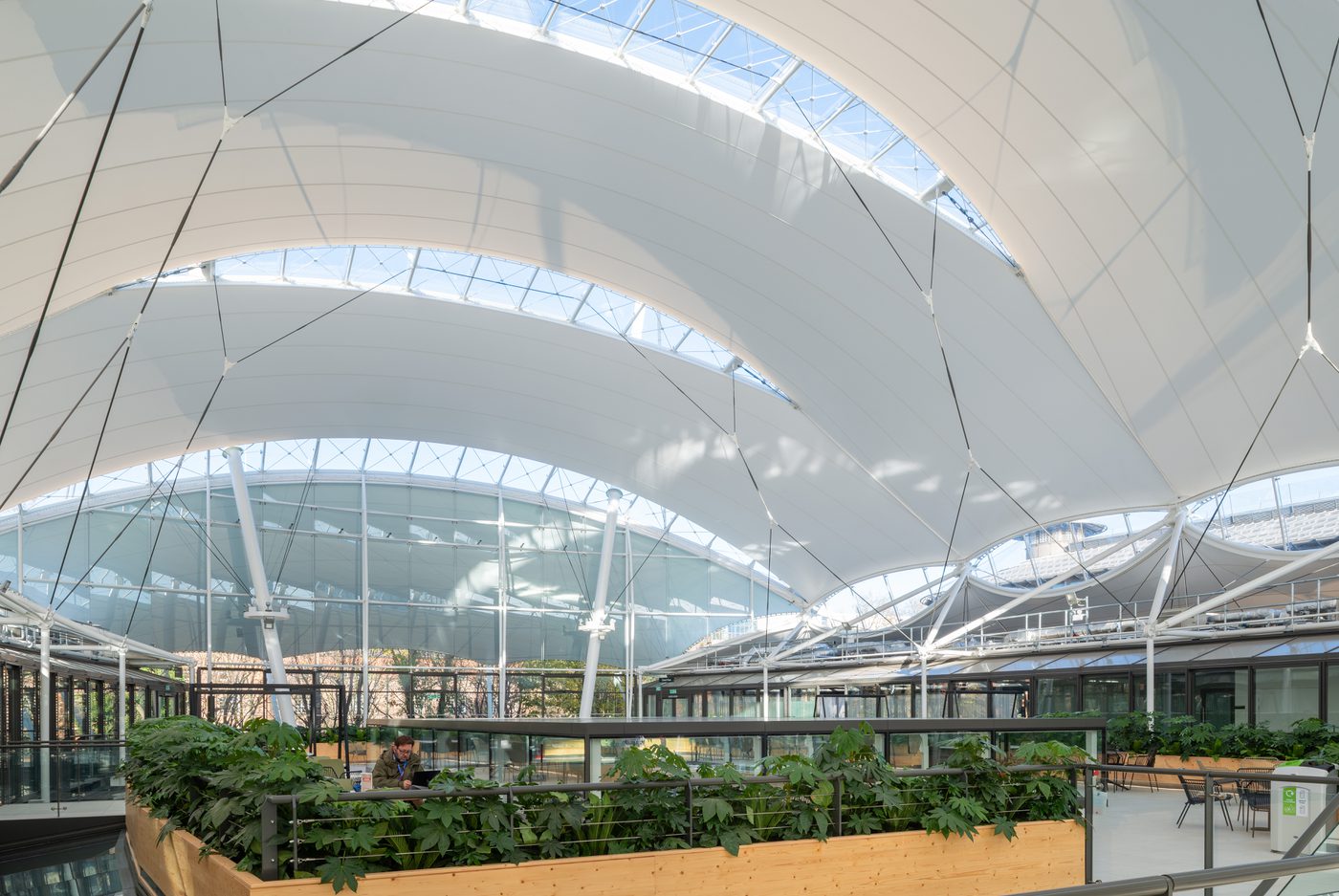
The replacement of the roof truss glazing presented a series of significant challenges. The existing glass, over 30 years old, was toughened only and needed replacing with toughened and laminated glass to ensure it continued to meet current planning regulations. As a result, the new specification called for 19.5mm laminated toughened units. Due to the deflections of the ladder trusses during the roof detensioning and re-tensioning phases, the glazing works had to be carried out before the old canopy was removed and then completed following the installation of the new canopy.
This added considerable complexity and risk to the operation, as the installation team had to navigate the glazing units through the network of the roof’s tierod system. In some instances, glazing panels had to be carefully lowered onto a specially designed sled and moved across the surface of the newly installed canopy to reach their final position. This high-risk installation was expertly executed by RAC Ltd, with precision and care essential to avoid any damage to the newly installed fabric below.
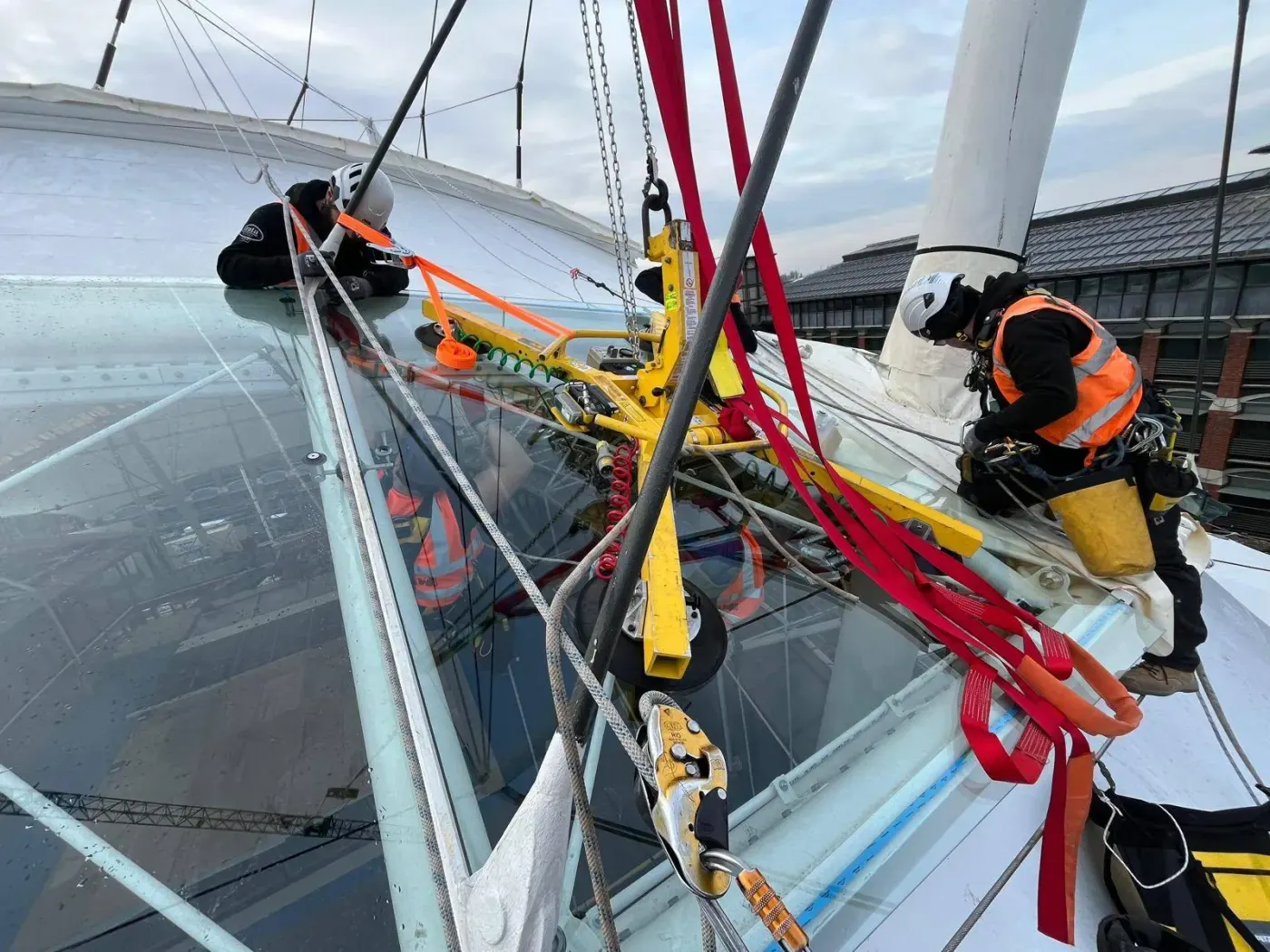
Built for the Next Generation
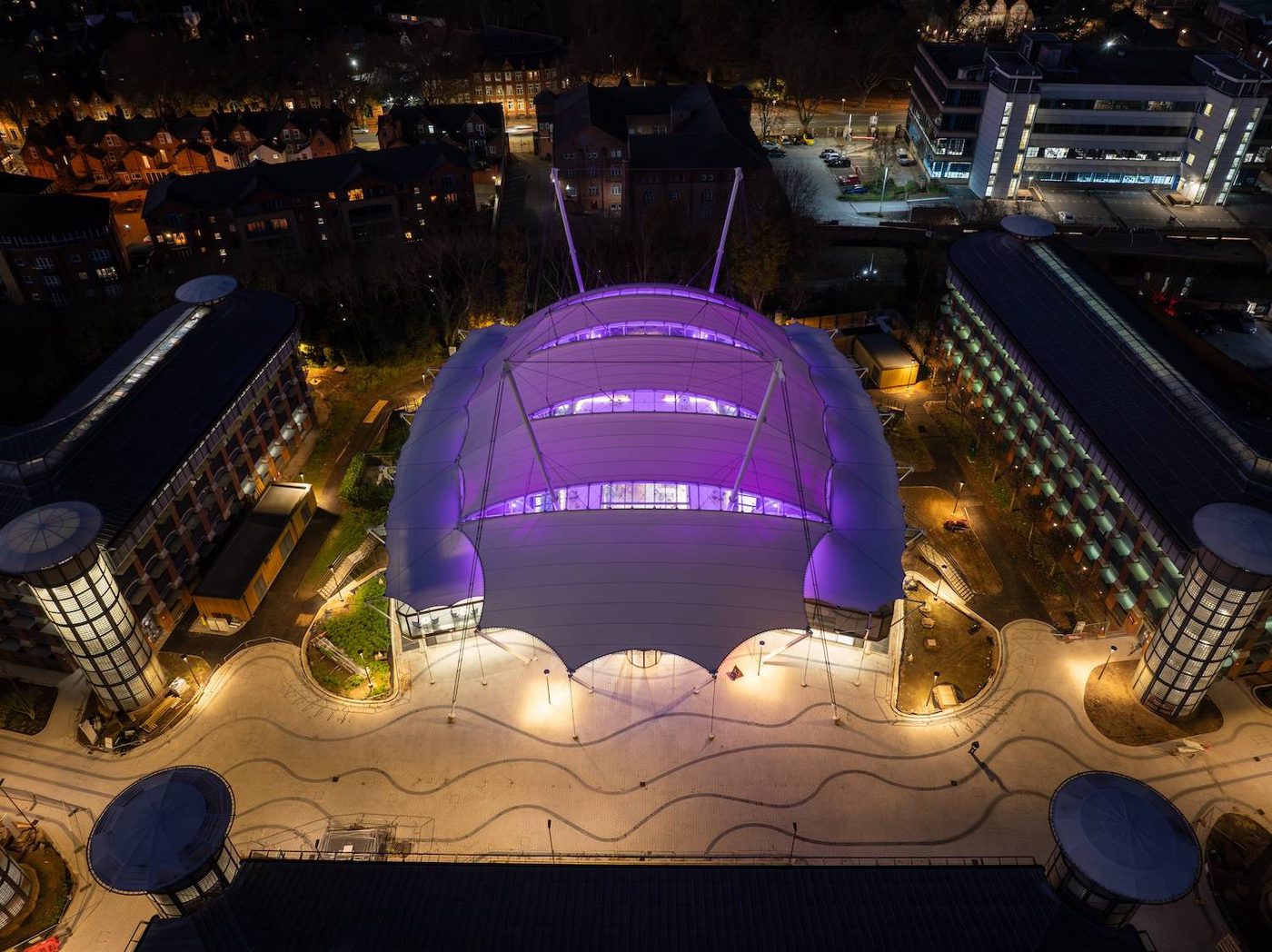
The completed roof is a thoughtful replacement of the original canopy, designed to preserve the qualities that makes this structure so distinctive. By introducing a high-grade PVC fabric and carefully considered detailing, the new installation maintains the lightness, openness and architectural intent of the original roof while providing a durable solution for the future.
In doing so, the project sets a clear precedent for how complex structures of this scale can be successfully renewed into the future. It demonstrates that with the right expertise, even the most challenging assets can be adapted to meet contemporary demands by extending their lifespan, improving usability and reinforcing their role within a modern environment.