Bach Music Hall
Client
JS Bach Music Hall
Location
Manchester
Architect
Zaha Hadid Architects
Client
JS Bach Music Hall
Location
Manchester
Architect
Zaha Hadid Architects
A Sculptural Fabric Installation
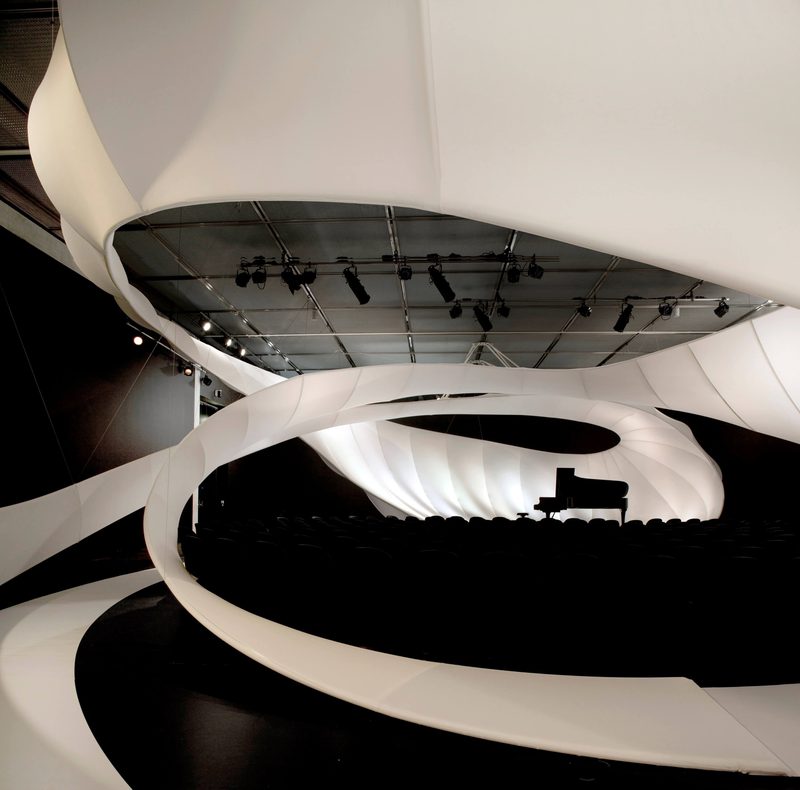
We engineered and delivered a continuous fabric ribbon installation for the JS Bach Music Hall, transforming a gallery space into an intimate, acoustically responsive performance environment.
Translating Music into Space
Manchester International Festival (MIF) is an artist-led, commissioning festival which presents new works from the performing arts, visual arts and popular culture. As part of the 2009 festival, Zaha Hadid Architects was commissioned to design a contemporary salon to house solo performances of Johann Sebastian Bach’s music.
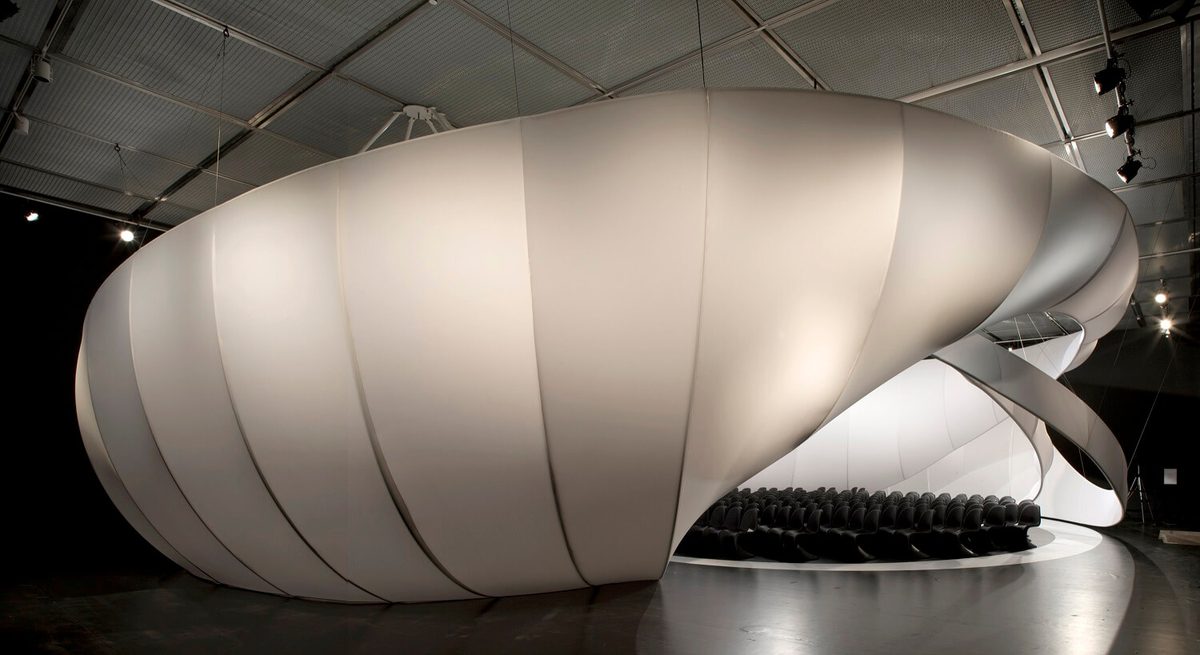
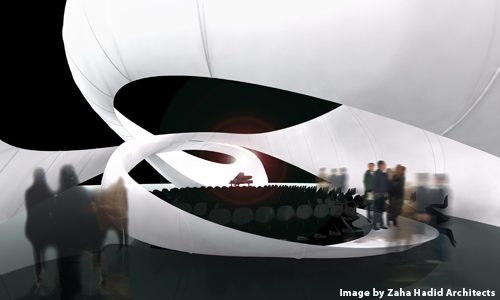
The installation was to be housed in a 25m x 17m ‘black box’ in the Manchester Art Gallery. Zaha Hadid Architects responded with a stunning design consisting of a 110m long white ribbon which would wrap itself around both the stage and the audience, creating a dynamic yet intimate performance space.
A Sculptural Form
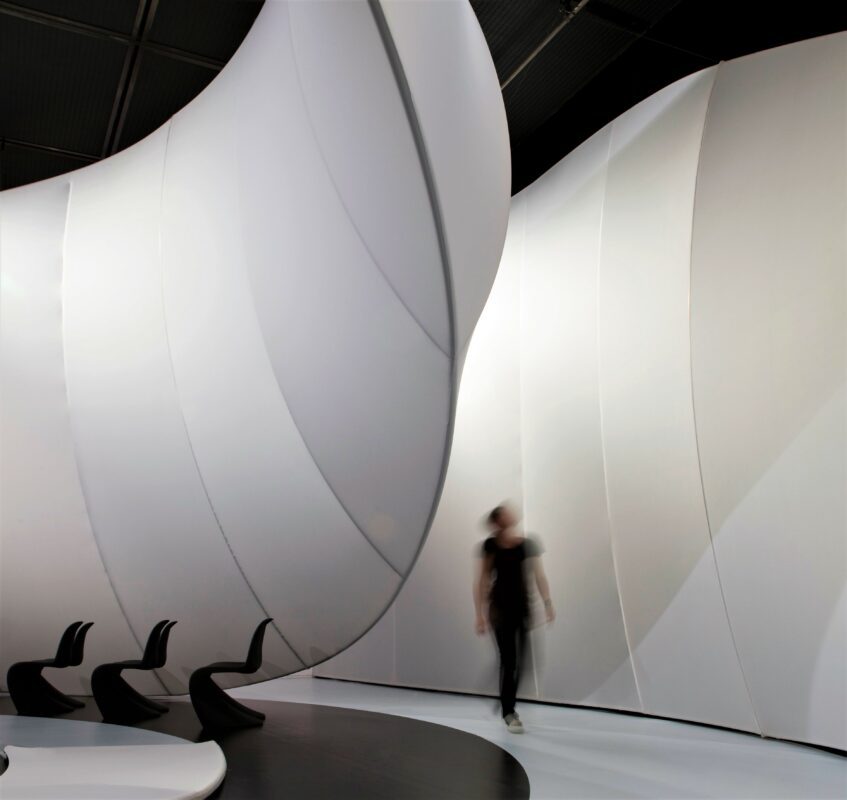
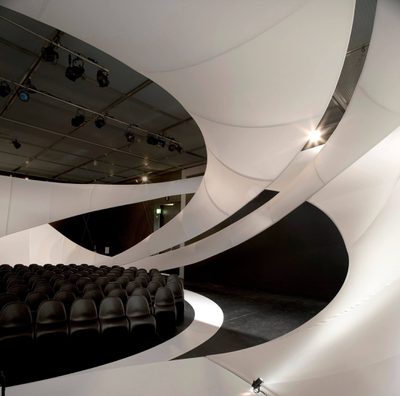
We worked closely with Zaha Hadid Architects to develop, manufacture and install a 110-metre-long continuous fabric 'ribbon' that defines the entire performance space.
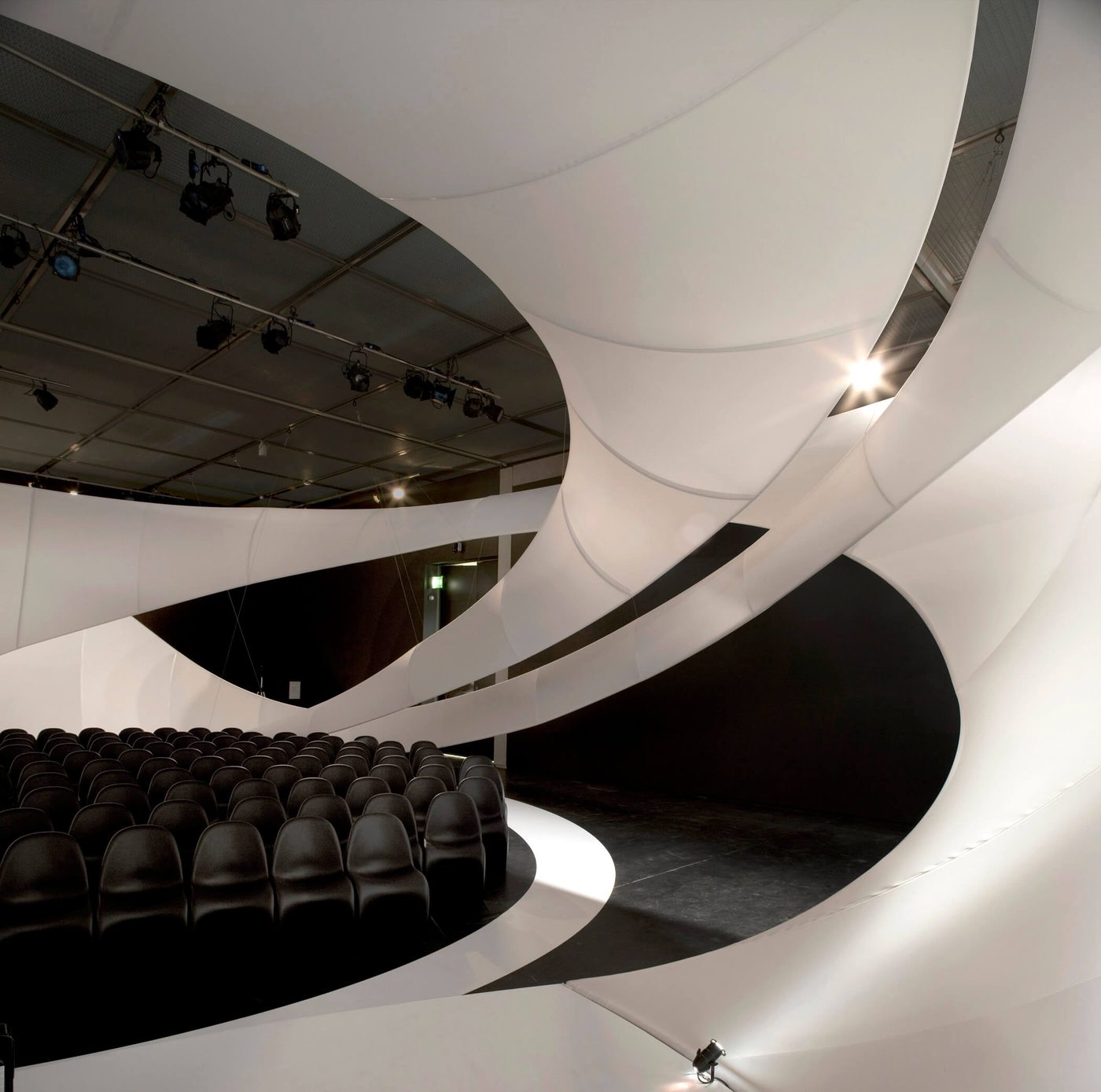
The structure combines a lightweight aluminium frame with a stretch Lycra membrane, allowing the form to move seamlessly between tight, compressed sections and expansive volumes. This flexibility was essential in achieving the flowing, sculptural geometry envisioned by the architects.
Advanced 3D modelling and prototyping were used to translate the complex digital design into a buildable system, ensuring the fabric behaved as required once tensioned over the frame.
Acoustic performance was integrated into the structure, with concealed reflector panels and carefully controlled material behaviour enhancing sound clarity within the space. The ribbon not only defines the architecture, but also shapes the acoustic environment, enclosing the performer and audience within a coherent space.
Despite its complexity, the installation was delivered within an accelerated programme, with final installation completed in just three days using two teams working continuously.

An Immersive Space
The first challenge for us was to transform the architect’s complex 3D model into a buildable structure that retained all the fluidity of the original design. With the help of experienced tensile engineers Tony Hogg Design, we constructed a framework that replicated the model exactly. And to be certain of the fabric’s suitability, we fabricated and wrapped a prototype section of the frame to test fabric compensations.
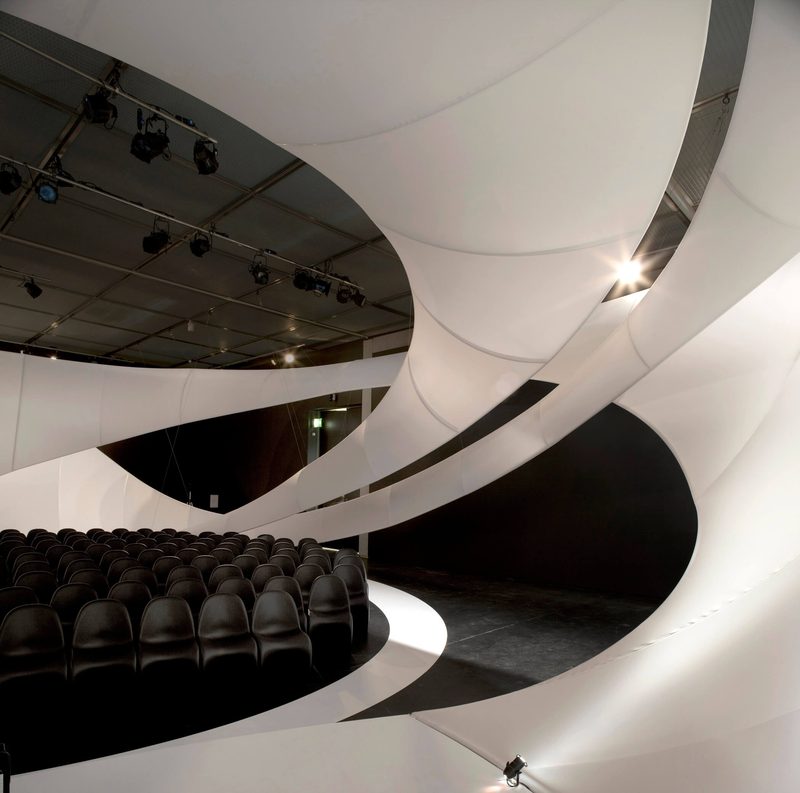
The completed installation transforms a simple gallery into a dynamic, immersive chamber music hall. The continuous ribbon wraps, folds and flows through the space, creating a series of interconnected environments that bring performers and audience into close proximity.
Visually, the structure appears as a floating, sculptural form, an object within the room that simultaneously defines and dissolves spatial boundaries. At the same time, it enhances the acoustic experience, supporting the clarity and intimacy required for solo performances.
The project was widely praised for its integration of design, engineering and performance, and has since toured internationally, demonstrating its adaptability and continued relevance beyond its original setting.
Expert Engineering
For the ‘ribbon’ to perform as intended, it was imperative that a smooth change of curvature was maintained throughout the structure. So our solution featured a series of eye shaped rib frames, connected with a top and bottom rail each rolled to a specific radius. Speed of installation was essential too, so turned nylon spigots were employed to connect the frames with a push fit connection. Likewise the fabric was designed to be applied rapidly by only having nine ‘fields’ which were zipped together with a discrete plastic closure, utilising our expertise from the banner finishing side of its business.
The frame was hung by 2.5mm stainless steel cables from suspension points in the gallery ceiling, incorporating an easy to adjust fastener. Base also supplied the stage platform and fitted rigid acoustic reflector panels inside parts of the ribbon, directed by acoustic engineers, Sandy Brown Associates. The structure was installed in three days with two teams of four riggers, working day and night shifts.
The Results
The result was a single continuous ribbon which swirled around one of the main rooms in the Manchester Art Gallery, creating layered spaces cocooning both performers and the audience. Our successful realisation of Zaha Hadid Architect’s design was largely due to the combined experience of the team, ranging from engineering; detail design; fabrication of the frame; assembly of the fabric; and the professional site crew.
The project’s triumph was also recognised by one arts critic in particular, stating that the structure not only worked as a sculptural object but acoustically as a chamber music venue. The structure has since visited the Amsterdam Festival in 2010 and is due to continue its tour, scheduled for a visit to Abu Dhabi in March 2011.